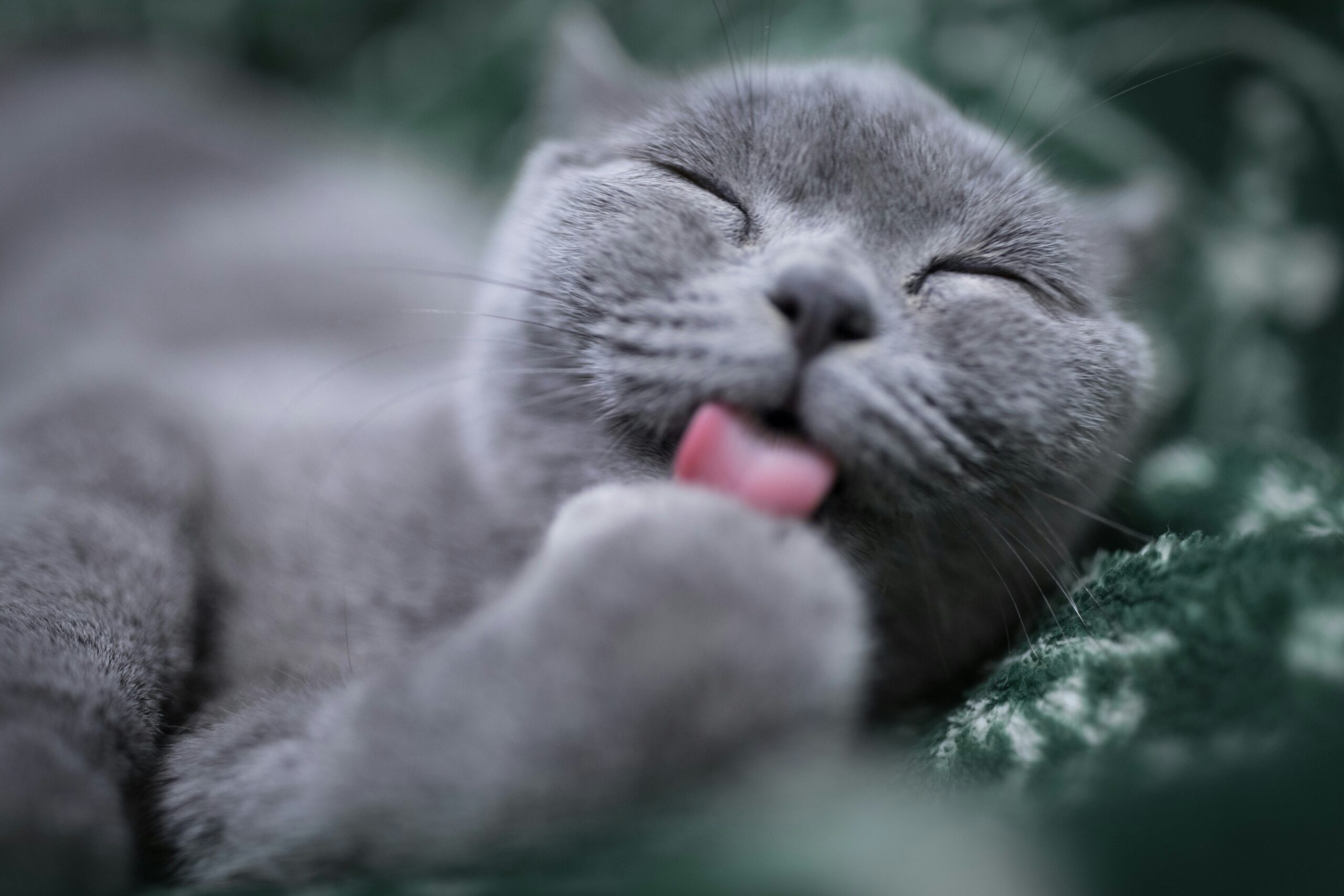
Why Does My Cat Lick Me?
This grooming tool in their mouths – armed with miniature barbs – does wonders for a cat’s skin and fur; thus when one suddenly decides to liven your cheek, hand After feeling that rough tongue on your skin—or even your hair—you may find yourself wondering, “Why does my cat lick me?”
Often, we perceive our cats’ licking the way we’d view our dog kisses as a display of love, and that can be part of it — though usually it’s not so simple when it comes to felines.If you’ve ever wondered, why does my cat lick me, the answer often depends on the context. Here are some emotional, physical and social reasons why your cat may be licking you: You either are: Trust you. Grooming behavior (natural in instinct. Curiosity regarding your scent (they want to lick on a new perfume/body scent). Stress and anxiety.
Because cats communicate differently from humans, it’s easy to misunderstand what licking actually means. If you’ve been asking, why does my cat lick me, the answer often lies in your cat’s body language, emotions, and natural instincts.You could see one cat, having cozyed up on the sofa for a sleep against your body, slowly starting to pur and nibble at your back to show her love, and anothercat that continues with the soft lick-and-nip on your hand. Thesebehaviors might just seem confusing or paradoxical, but there’s more at play in our kitty friends’ lives.
Understanding what leads cats to lick people can help you as a pet parent be more accurate in assessing and responding to your feline friend. Thinking about each lick as simply a lick may miss the point, as it’s better to integrate the licking with their other behaviors, environmental signals, and your connection to each other. It becomes evident that when you analyze it in context, licking is just one component within a communication system composed largely of other olfactory cues, touch, and signals.
Today in this article, we’ll discuss why your cat Licks you, when It is Normal or problem and how you can decipher what your cat wants from you in its own language.
Understanding Why Cats Lick
Lick vs Other. Before getting into specific examples for the reasons as licking is to an extreme, its is good to grasp onto your natural daily life what our kitty plays on their lick behaviours.
There is little doubt that cats spend most of their waking hours grooming. The process helps keep the cat’s coat in good condition by helping the cat remove dirty or excess fur, disperse skin oils and helps the cat to control the body temperature. The action of grooming is a very soothing activity for cats.
But grooming isn’t limited to self-care.
Social groomings of closely socially-associated cats to each other are called mutual gratifications. Mothers will groom the offspring and close bonded- cats will groom a closely social companion to a point that they can gratify the other animals if they fit to their social circle.
When your cat licks you, it may simply be treating you as a trusted member of its family.
One of the Most Common Reasons: Your Cat Is Showing Affection
Perhaps the most heartwarming explanation is also one of the most common.
Many cats lick people because they feel safe, secure, and emotionally connected to them.
Unlike humans, cats don’t express affection through hugs or spoken words. Instead, they rely on behaviors such as:
- Slow blinking
- Head bunting
- Rubbing against your legs
- Sleeping nearby
- Kneading
- Gentle grooming
Licking often belongs to this collection of affectionate behaviors.
When your cat climbs stealthily into your lap and licks your hand and purrs your it, he’s typically showing off trust or asking nothing out of you.
Not all doting felineslicks their people, however when cats choose this affection, it usually comes from the same social, caring act they carry out towards friends or relations they know they’re able to rely upon.
Cats Groom Those They Consider Family
In the wild and in multi-cat households, grooming isn’t only about cleanliness.
Cats frequently groom close companions to strengthen social relationships.
This behavior serves several purposes:
- Reinforcing trust
- Reducing tension
- Sharing familiar scents
- Strengthening social bonds
When your cat licks your arm or fingers, it may be extending this same behavior toward you.
From your cat’s perspective, you’re not simply the person who provides food—you’ve become part of its trusted social circle.
This explains why many cats groom only certain people within a household while ignoring others. The behavior reflects relationship strength rather than simple familiarity.
Your Cat May Be Marking You With Its Scent
Cats experience the world through scent far more than humans do.
They possess scent glands around the:
- Cheeks
- Chin
- Lips
- Forehead
- Paws
Even though a cat lick won’t leave any scent glands like a head rub does, grooming a person will give a your feline friend an opportunity to combine her natural scent to your own through the use of saliva and intimate physical contact.
This encourages the creation what is sometimes known among behaviorists as family odor- a personal house-scent of those who are accepted into the fold of the home, the good and faithful few we have learned will not harm.
It’s one reason cats often combine licking with:
- Rubbing their face against you
- Head butting
- Curling against your body
- Sleeping beside you
Together, these behaviors strengthen the social connection between cat and owner.
Why Does My Cat Lick Me After I Shower?
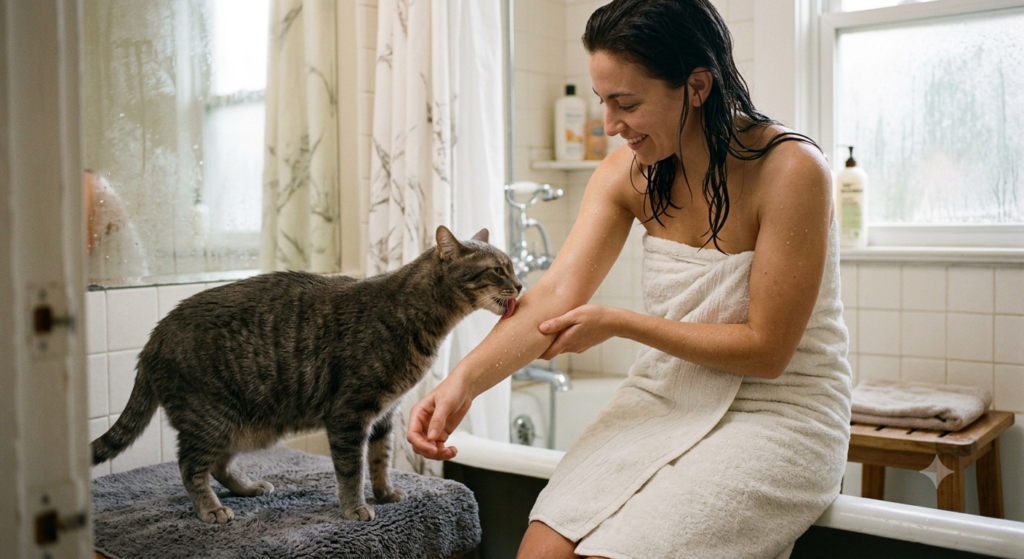
Many owners notice their cat becomes especially interested immediately after a shower.
There are several possible explanations.
Fresh soap, shampoo, lotion, or damp skin introduces unfamiliar smells and textures that naturally attract a curious cat.
Cats investigate new scents with both their noses and mouths, so a few exploratory licks aren’t unusual.
Your skin may also contain traces of:
- Salt from perspiration
- Moisture
- Skin-care products
- Natural body oils
However certain cats can look rather curious when there is sweat skin or warmer weather, just be sure to remember not to feed cats such cream lotions, sunscreen and meddicated make up a substance.
Curiosity Is Part of the Behavior
Cats are naturally investigative animals. Learning more about understanding feline behavior can help explain why cats use licking, scent, and body language to communicate with people.
Unlike people, they gather information using multiple senses at once.
When encountering something unfamiliar, a cat may:
- Sniff
- Touch with its paws
- Rub its face
- Lick
- Taste briefly
Did you just touch some food, a plant, an object you don’t use usually? Maybe your cat lick your finger, to explore and investigate the “new smells”, like for his owner. This lick often stays on short term and may be devoid of any emotional context, is only an other kind of information use via the taste and smell test
Kittens Learn Licking From Their Mother
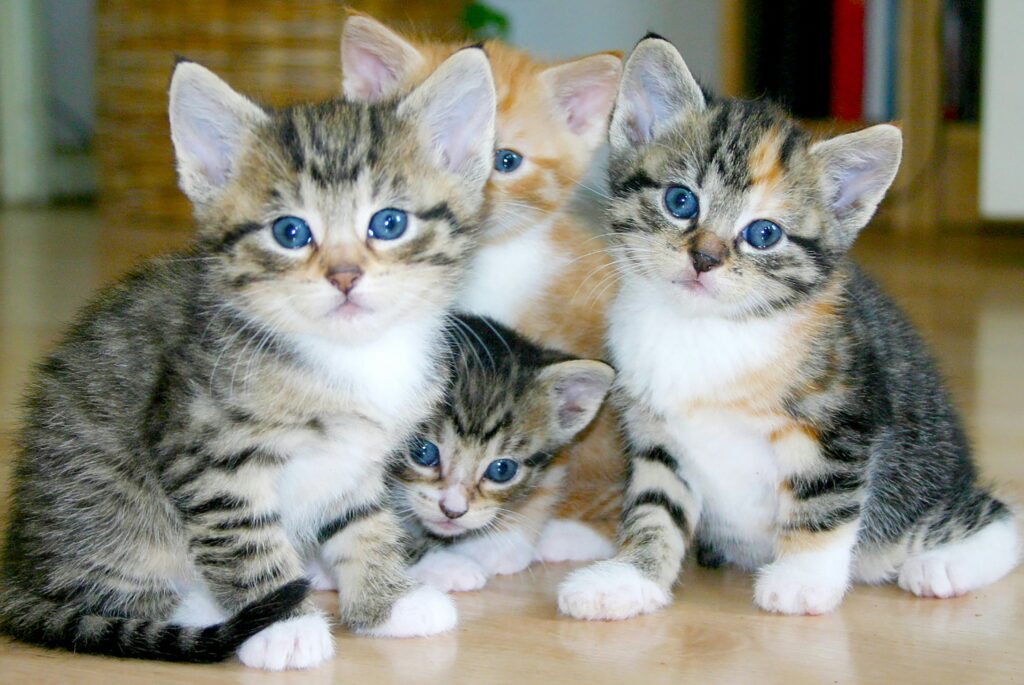
A kitten’s first experience with grooming comes almost immediately after birth.
Mother cats lick newborn kittens to:
- Clean them after delivery
- Stimulate breathing
- Encourage circulation
- Help them urinate and defecate during the first weeks of life
- Strengthen the maternal bond
As kittens grow, they begin grooming themselves and their littermates.
These early experiences teach cats that licking is associated with safety, care, and social connection.
Even as adults, many cats retain these instincts and often direct them toward the people who love and care for them, which may include you.This is why licking behavior is deeply ingrained and often has roots from a cat’s infancy to quite late in their lives.
Why Does My Cat Lick Me and Then Bite Me?
It’s one of the strangest actions you’ll witness from your loving feline: you and your cat are engaged in a pleasant pet-fest, and it’s going swimmingly until – BAM! You receive a small bite from your furry friend, as if he’s just flipped a switch, but no – your kitty didn’t suddenly get “bad.” This type of biting is very common and isn’t necessarily indicative of any mean behavior.
Here are some possible reasons:
Your Cat Became Overstimulated
Cats have individual limits for physical contact. A cat may enjoy licking and petting for several minutes before becoming overstimulated. Once that threshold is reached, a gentle nibble or bite serves as a signal that it’s time to stop.
Signs of overstimulation often include:
- Tail flicking
- Flattened ears
- Dilated pupils
- Skin twitching along the back
- Sudden body tension
Learning to recognize these early signals helps prevent unwanted bites.
Grooming Turned Into Play
Cats naturally combine grooming with playful behavior, especially when interacting with littermates. A few licks followed by a soft bite often mimics the social interactions they experienced as kittens.
These “love bites” are usually gentle and don’t break the skin.
Your Cat Is Setting Boundaries
Sometimes the bite simply means, “I’ve had enough.”
Respecting your cat’s signals helps build trust and prevents future overstimulation.
Your Cat May Be Seeking Attention
Cats quickly learn which behaviors earn a response from their owners.
If licking consistently results in petting, conversation, treats, or playtime, your cat may begin using it as an attention-getting strategy.
For example, your cat may lick your hand while you’re working on a laptop or reading a book because it has learned that this behavior causes you to stop and interact.
Attention-seeking licking isn’t necessarily problematic unless it becomes excessive or interferes with your cat’s normal routine.
Can Stress or Anxiety Cause Excessive Licking?
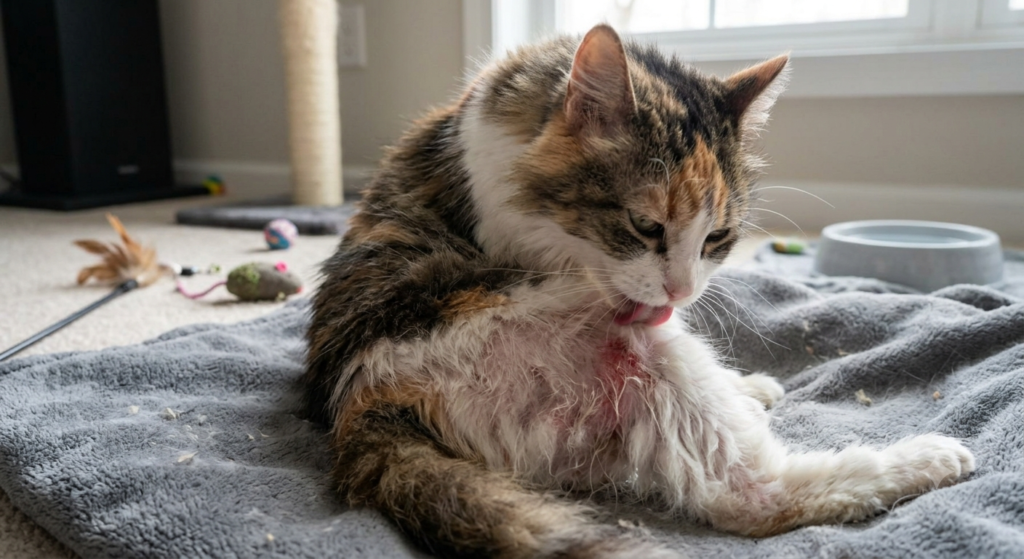
While occasional licking is perfectly normal, excessive licking toward people or objects can sometimes indicate emotional stress.
Changes that may trigger anxiety include:
- Moving to a new home
- Introducing another pet
- Major household changes
- Loud construction
- Separation from family members
- Changes in daily routine
Some anxious cats develop repetitive behaviors that help them cope with uncertainty.
These behaviors may include:
- Excessive grooming
- Repeated licking of owners
- Wool sucking
- Compulsive kneading
- Repetitive pacing
If licking suddenly increases after a stressful event, it’s worth considering whether environmental changes could be contributing.
Medical Conditions That May Influence Licking
Behavior isn’t always the only explanation.
Certain health problems can sometimes change a cat’s grooming habits or increase licking behavior.
Potential medical causes include:
Skin Irritation
Allergies, flea infestations, or skin infections may cause cats to groom more frequently than usual.
Dental Problems
Painful teeth or gum disease occasionally alter oral behaviors.
Nausea
Cats experiencing nausea may drool, lip-lick, or display unusual licking behaviors.
Cognitive Changes
Senior cats experiencing age-related cognitive decline may develop repetitive behaviors that differ from their normal routine.
Because these symptoms overlap with many other conditions, owners shouldn’t attempt to diagnose medical issues based on licking alone.
If the behavior changes suddenly or is accompanied by weight loss, vomiting, poor appetite, lethargy, or other unusual symptoms, a veterinary examination is the safest course of action.
Does the Texture of Human Skin Attract Cats?
Your skin itself may explain some licking behavior.
Human skin contains:
- Natural oils
- Tiny amounts of salt from perspiration
- Different scents throughout the day
- Residual food aromas
- Moisture after bathing
A curious cat may investigate these changing scents through licking.
This explains why some cats show greater interest after exercise, cooking, gardening, or handling food.
However, owners should avoid allowing cats to lick areas covered with medications, essential oils, sunscreen, insect repellent, or cosmetic products, as some ingredients can be harmful if ingested.
Why Some Cats Never Lick Their Owners
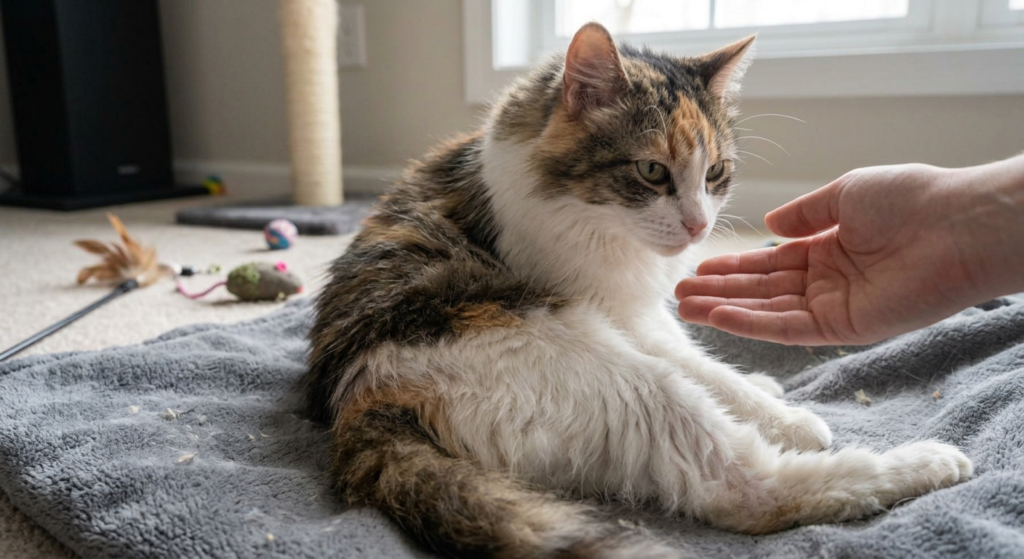
Not every affectionate cat expresses love through licking.
Some cats prefer other forms of communication, including:
- Slow blinking
- Sleeping beside you
- Following you from room to room
- Head bunting
- Tail wrapping
- Quiet companionship
- Gentle purring
Personality, early socialization, breed tendencies, and life experiences all influence how individual cats interact with people.
A cat that never licks you can still be deeply attached and emotionally bonded.
Should You Let Your Cat Lick You?
For most healthy cats, occasional licking is harmless.
However, a few precautions are worth keeping in mind.
Wash any scratches or broken skin promptly, since bacteria naturally present in a cat’s mouth can occasionally cause infections if introduced into open wounds.
It’s also best to discourage licking of:
- Open cuts
- Surgical incisions
- Areas treated with medication
- Your face if you have weakened immunity or active skin conditions
For healthy adults with intact skin, occasional licking generally poses little concern.
How to Respond When Your Cat Licks You
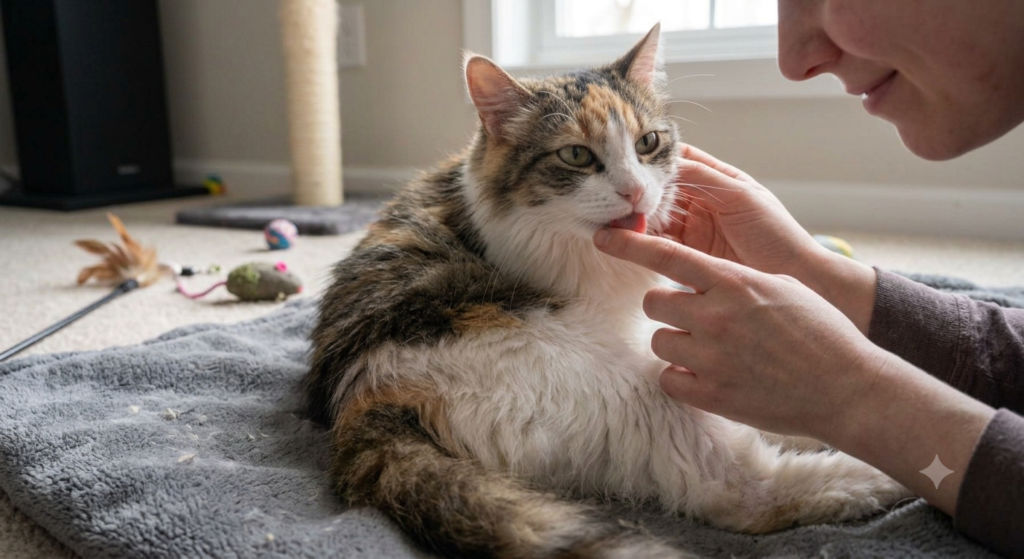
The best response depends on why your cat is licking.
If your cat appears relaxed and affectionate, enjoy the interaction if you’re comfortable with it. Gentle petting or quiet companionship reinforces your bond.
If licking becomes excessive, avoid punishment. Instead, redirect your cat’s attention toward:
- Interactive toys
- Puzzle feeders
- Short play sessions
- Scratching posts
- Climbing trees
- Window perches for bird watching
Environmental enrichment often reduces boredom-related behaviors and provides healthy outlets for natural feline instincts, especially when you incorporate indoor cat enrichment ideas into your pet’s daily routine.
If excessive licking persists despite these changes—or is accompanied by signs of illness, stress, or discomfort—a veterinarian or qualified feline behavior professional can help identify the underlying cause.
By considering your cat’s body language, daily routine, and overall health alongside the licking behavior, you’ll gain a much clearer understanding of what your feline companion is trying to communicate.
Conclusion
Understanding why does my cat lick me begins with recognizing that cats communicate very differently from humans. You can also explore our cat care and pet wellness guides to better understand your feline’s behavior, health, and daily needs. A lick is rarely a random act
More commonly, however, it comes in the form of one component of the full language and interaction that is influenced by instinct, developmental age, and the cat’s social bonds and personality. If your cat is tending the fur of your hand as she purrs or licks your arm for a second when you first come back into the room after an absence, chances are her behaviour signals affection, curiosity or an urge to strengthen social ties.
Another commonly accepted reason for your cat licking you is similar to the way cats groom each other; As a social grooming act; they see you as a pack member of sorts – similar to the bond cats have formed throughout time for grooming other friendly cats. Licking is a way a cat can try new things they taste or learn about, for the taste of salt in the sweat of our skin or to try new scents.
It’s also good to know that not all licking situations stem from pleasant feelings. Sudden, obsessive licking which is accompanied by behavioral changes-inappropriate elimination, reduced appetite, excessive grooming, vocalizing to indicate pain, etc.-can be an indicator of underlying anxiety or an illness. You’ll gain much more understanding of a dog by looking at all his body language and state of health rather than just the act of licking alone.
It is not really about licking being “good” or “bad” and the appropriate question that anyone wants answered is rather: what does the licking signify about cat body language?Observing her routine, the context of the situation, and the behavior of other pets can help you understand her concerns. In healthy cats, infrequent groominglicks are just another facet of their love of someone special in their lives.
Frequently Asked Questions
1. Why does my cat lick me every day?
The daily act of your feline partner lapping up his or her loved on’s flesh are frequently viewed as indicators of love, comfort, grooming. And while it is true that your pet’s routine lapping sessions may be the indication that she or he feels good and contented around the family- as there are indications you should pay some regard for your cat is lancing frequently.
2. Why does my cat lick my face?
There are several reasons why cats lick human faces – they find your natural odor (or your skin’s oils) appealing, or face grooming is something of a social bonding ritual between cats. Best to discourage them around your face-particularly your eyes, nose, and mouth. Otherwise, their germs could transfer to yours.
3. Why does my cat lick me and purr at the same time?
Purring and licking your cat is likely a sign your cat loves you, trusts you, or is secure and attached in another way. These are two feline gestures that your cat is likely to use in normal social behavior.
4. Is it normal for my cat to lick me before going to sleep?
Yes, it is, many cats will perform or may engage themselves or someone nearby before they take a nap. Some feline experts consider licking them prior to settling them may assist them getting relaxed and secured.
5.Why Is My Cat Grooming My Hair?
The familiar scent and natural oils in human hair can make it interesting to your cat. Some cats also treat hair like fur, grooming it as they would another cat in their social group.
6. Should I stop my cat from licking me?
Once in a whilelicking should be fine for a healthy cat and a healthy owner. Nevertheless, when licking becomes obsessive and is causing discomfort, and it starts manifesting along with other strange symptoms it’s recommended to check with your cat a professional veterinarian just to rule out any form of stress and other medical complications.
7. Why does my cat suddenly start licking me more than usual?
There may have been a change in routine, attention, curiosity, boredom, anxiety, or, rarely, the cause is an illness. Your dog may need a check-up from his veterinarian if excessive licking continues, or if other symptoms develop that suggest ill health.