Cafes and food businesses create a demanding pest-control environment. Deliveries arrive frequently, food is prepared throughout the day, waste accumulates quickly and doors may open repeatedly. Even a small issue can affect customer confidence, staff wellbeing, stock and compliance. A strong pest management program combines daily hygiene with professional monitoring and clear records.
Inspect deliveries before storage
Cockroaches, stored-product pests and rodents can be introduced through cartons, pallets, produce and second-hand equipment. Create a designated receiving area where staff can inspect packaging for droppings, webbing, insects, gnawing or moisture damage. Remove unnecessary cardboard promptly and avoid placing incoming stock directly into clean storage without checking it.
Use stock rotation and sealed storage
Dry goods should be stored in durable, food-safe containers with secure lids. Apply a first-in, first-out system so older products are used before newer deliveries. Keep shelving organised and allow enough clearance for cleaning and inspection. Spilled flour, sugar, grains, nuts and drink powders can support pests in tiny amounts, especially beneath shelving where routine cleaning may miss them.
Deep-clean equipment and hidden edges
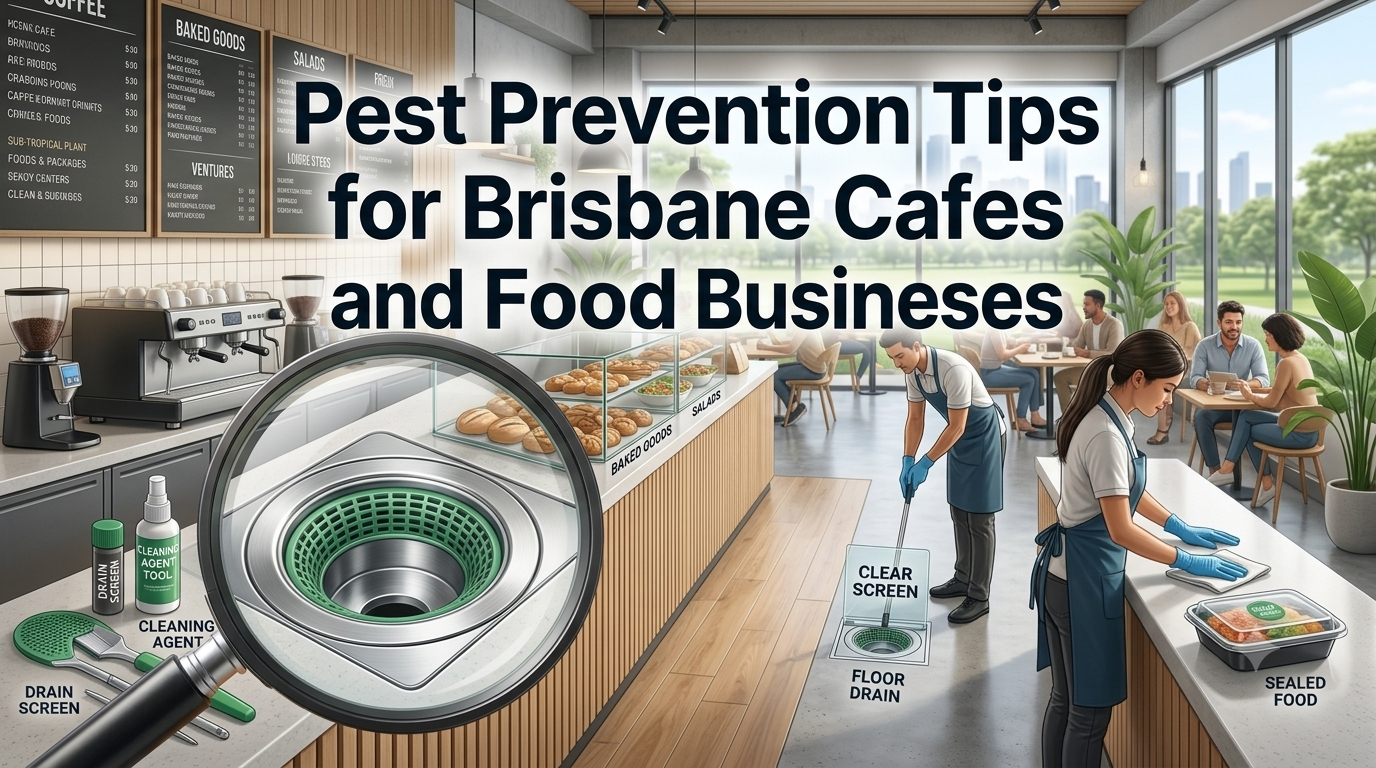
Daily surface cleaning is essential, but many infestations begin in warm voids around coffee machines, refrigerators, dishwashers, cooking equipment and wall junctions. Build scheduled deep cleaning into operations and document completion. Floor drains, grease traps and waste areas should be maintained according to the site’s requirements, as organic build-up and moisture can attract flies and cockroaches.
Control waste from preparation to collection
Bins should have suitable liners and lids, be emptied regularly and be cleaned to remove residue. External waste areas should be kept orderly, with lids closed and spills addressed promptly. Avoid allowing bags or food waste to remain beside bins. The route used to move waste through the premises should also be cleaned so pests are not provided with a repeated food trail.
Maintain doors, screens and service gaps
Busy doors are a common access point for flies and rodents. Use suitable self-closing systems, door seals, screens or air curtains where appropriate for the premises. Check gaps around plumbing, refrigeration lines and electrical conduits. Any exclusion work must preserve ventilation, fire safety and building requirements, so repairs may need a qualified trade.
Train staff to report early signs
Staff may notice a single cockroach, unusual odour, droppings, damaged packaging or fly activity before management does. Establish a simple reporting process and record the time, location and details. Early information allows the pest professional to identify patterns and prevents staff from applying unapproved sprays in food preparation areas.
Use a documented professional program
Commercial pest management should reflect the business type, operating hours, layout and pest history. Monitoring devices, service maps, treatment records and corrective actions can help demonstrate that risks are being managed. Brisbane Termite & Pest Control provides commercial pest services and can develop a schedule around the needs of Brisbane cafes, restaurants, warehouses and other workplaces.
Conclusion
Pest prevention in a food business depends on consistency. Delivery checks, sealed storage, deep cleaning, waste control, maintenance and staff reporting all support the professional treatment program. When these elements work together, the business is better placed to identify activity early and protect its customers and reputation.