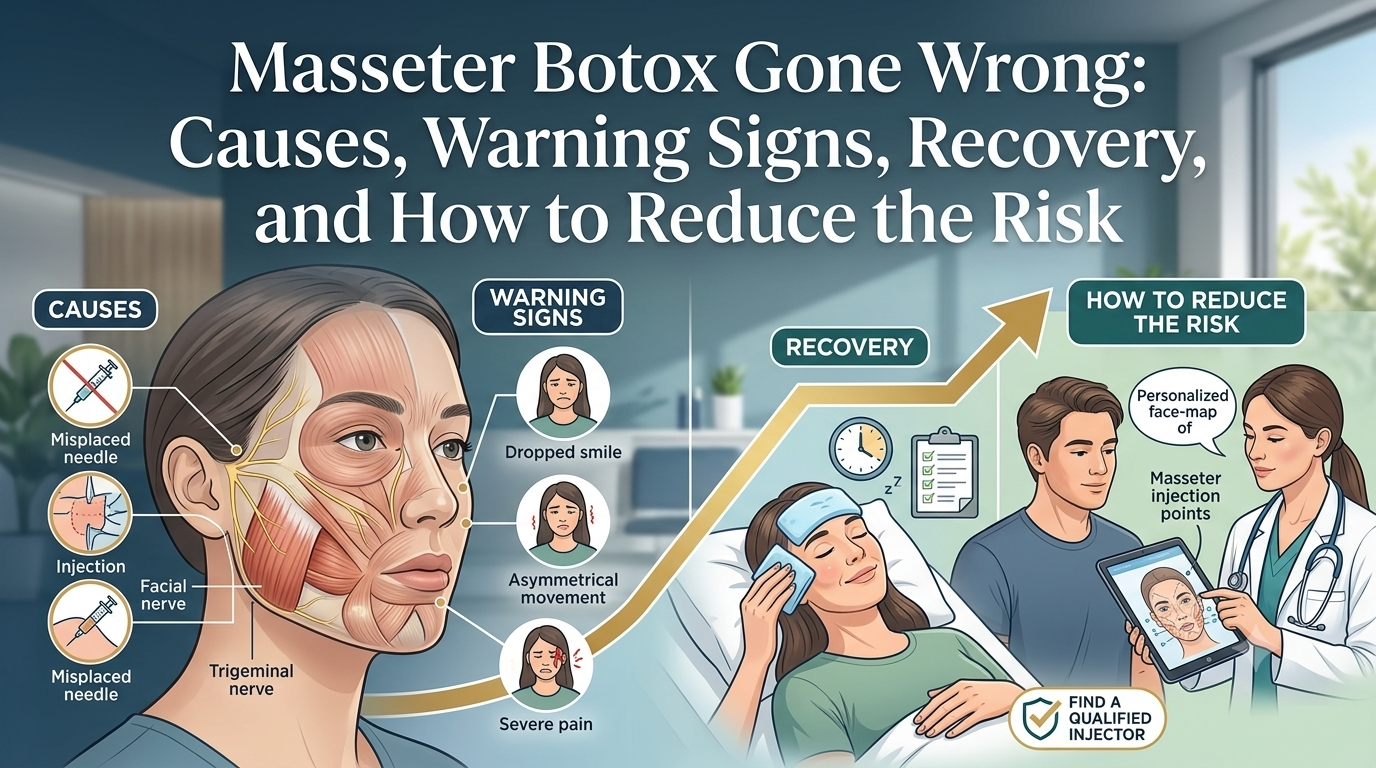
Interest in masseter Botox has grown rapidly in recent years. Some people seek it to relieve jaw clenching or teeth grinding, while others choose it to create a slimmer facial appearance. When performed by a qualified medical professional and used for an appropriate indication, masseter Botox can provide noticeable benefits. However, like any cosmetic or medical procedure, it also carries potential risks.
Searching for masseter botox gone wrong often means someone is worried about unexpected results. Perhaps their smile feels different, their face appears uneven, or they’re experiencing discomfort they didn’t expect. Others are researching possible complications before deciding whether the treatment is right for them.
Most side effects are temporary and improve as the effects of Botox gradually wear off. Serious complications are uncommon when injections are performed by trained healthcare professionals using proper techniques, but understanding the possible risks can help you make informed decisions.
This guide explains what masseter Botox is, why complications occur, what symptoms deserve attention, and how to reduce the likelihood of unsatisfactory results. For more beauty, wellness, and lifestyle insights, visit Sphere Lifestyle.
What Is Masseter Botox?
Masseter Botox involves injecting botulinum toxin into the masseter muscles, the large muscles located at the angle of the jaw that help with chewing.
The treatment is commonly used for two broad purposes:
- Medical: To reduce excessive jaw muscle activity associated with teeth grinding (bruxism), jaw clenching, or certain temporomandibular joint (TMJ)–related symptoms.
- Cosmetic: To soften a square jawline by reducing the size of enlarged masseter muscles over time.
Botulinum toxin temporarily reduces muscle activity by blocking the nerve signals that tell the muscle to contract, a mechanism that is well explained through neuromuscular junction function. As the muscle becomes less active, it gradually weakens and may decrease in size over several weeks.
The treatment is temporary, and results typically wear off over several months.
What Does “Masseter Botox Gone Wrong” Mean?
The phrase masseter botox gone wrong doesn’t always refer to a dangerous complication.
In many cases, it simply describes results that differ from what the patient expected.
Examples include:
- Facial asymmetry
- An uneven smile
- Difficulty chewing tough foods
- A jawline that appears too narrow
- Changes in facial balance
- Muscle weakness that feels excessive
- Persistent discomfort or tenderness
Some of these effects are temporary adjustments that improve as the muscle adapts or as the medication gradually loses effect.
Others may require follow-up evaluation by the treating clinician.
Why Do Problems Sometimes Occur?
Several factors can contribute to undesirable outcomes.
Understanding these factors helps explain why results vary from person to person.
Individual Facial Anatomy
No two faces are identical.
The size, shape, and strength of the masseter muscles vary considerably.
Some people naturally have larger muscles on one side of the face, making precise treatment more challenging.
Experienced injectors assess facial symmetry before treatment rather than assuming both sides require identical doses.
Injection Technique
The exact placement of injections matters.
If Botox spreads beyond the intended area or is injected into neighboring muscles, it can temporarily affect muscles involved in smiling or facial expression.
Proper anatomical knowledge helps reduce this risk.
Dosage
Finding the right dose is a balance.
Too little Botox may produce minimal improvement.
Too much may create excessive muscle weakness or more dramatic facial slimming than intended.
The ideal dose depends on several factors, including:
- Muscle size
- Treatment goals
- Previous Botox history
- Individual response
Unrealistic Expectations
Sometimes patients expect immediate or dramatic changes.
Masseter Botox usually develops gradually over several weeks.
Similarly, cosmetic jawline slimming often requires patience because the muscle shrinks over time rather than overnight.
Clear communication before treatment helps align expectations with realistic outcomes.
Common Signs of Masseter Botox Gone Wrong
Although many side effects are mild, recognizing potential warning signs can help determine when follow-up is appropriate.
1. Uneven Facial Appearance
One of the most common concerns after masseter botox gone wrong is facial asymmetry.
Possible reasons include:
- Natural facial differences becoming more noticeable
- Unequal muscle response
- Different muscle sizes before treatment
- Uneven Botox distribution
In many cases, minor asymmetry can be evaluated during a follow-up appointment.
2. Changes in Your Smile
Some patients notice that their smile feels different after treatment.
This may occur if nearby muscles are temporarily affected.
Possible changes include:
- One side of the mouth lifting differently
- Reduced smile symmetry
- Feeling that smiling requires more effort
These changes are often temporary because the effects of Botox gradually diminish.
3. Difficulty Chewing
The masseter muscles play an important role in chewing.
Reducing their strength is expected to some degree.
However, excessive weakness may make chewing tougher foods uncomfortable.
People sometimes notice difficulty with:
- Steak
- Bagels
- Raw vegetables
- Chewy candy
Most individuals can still eat normally by temporarily choosing softer foods while the muscles adapt.
4. Excessive Facial Slimming
Many cosmetic patients seek a slimmer jawline.
However, reducing the masseter muscles too aggressively may create a facial shape that feels disproportionate.
Some people describe:
- Hollow-looking lower cheeks
- Loss of facial balance
- More noticeable jowls in mature skin
- A narrower lower face than expected
The likelihood depends on facial structure, age, skin elasticity, and treatment goals.
5. Bruising and Swelling
Minor bruising is among the most common injection-related side effects.
Small blood vessels can be affected during treatment, resulting in temporary:
- Redness
- Swelling
- Tenderness
- Mild bruising
These reactions usually improve within several days.
6. Temporary Jaw Weakness
Because Botox intentionally weakens the treated muscle, some reduction in bite strength is expected.
Problems arise when weakness interferes with daily activities.
Patients may notice:
- Fatigue while chewing
- Difficulty clenching the jaw
- Reduced bite force
These effects typically improve gradually as nerve signaling returns.
Less Common but More Concerning Complications
Although uncommon, certain complications deserve prompt medical evaluation.
Persistent Pain
Mild soreness immediately after injections is fairly common.
Pain that becomes progressively worse or persists well beyond the expected recovery period should be assessed by the treating clinician.
Difficulty Speaking
Botox placed incorrectly or spreading into neighboring muscles may occasionally affect speech.
Persistent speech changes warrant medical assessment.
Difficulty Swallowing
Difficulty swallowing is uncommon with properly performed masseter Botox because the injections target chewing muscles rather than throat muscles.
However, any significant swallowing difficulty should be evaluated promptly.
Allergic Reactions
True allergic reactions to botulinum toxin products are considered rare.
Possible symptoms include:
- Significant swelling
- Hives
- Difficulty breathing
- Severe rash
These symptoms require immediate emergency medical attention.
Early Warning Signs to Watch For
Not every unusual sensation indicates a problem.
However, contact your injector if you experience:
- Worsening facial asymmetry
- Unexpected muscle weakness
- Difficulty chewing that interferes with nutrition
- Persistent pain
- New facial drooping
- Concerns about your smile changing dramatically
Most experienced injectors schedule follow-up visits to evaluate healing and determine whether any adjustments are needed.
Who Is More Likely to Experience Unsatisfactory Results?
Certain situations may increase the likelihood of disappointing outcomes.
These include:
First-Time Patients
Without previous treatment history, determining the ideal dose can require a conservative approach.
Individuals With Naturally Thin Faces
Reducing the masseter muscles in already slender faces may produce more noticeable facial slimming than desired.
Patients Seeking Dramatic Cosmetic Changes
Large expectations may not match what Botox can realistically achieve.
Botox reduces muscle activity—it does not reshape bone structure.
Treatment by Inexperienced Providers
Perhaps the most important factor is injector experience.
The masseter muscle sits near several important facial muscles and anatomical structures.
Choosing an appropriately trained healthcare professional helps reduce the likelihood of complications.
Can Masseter Botox Affect Your Face Long-Term?
This is one of the most frequently asked questions by people researching masseter botox gone wrong.
Current evidence suggests that the effects of botulinum toxin are temporary because nerve function gradually returns over time. However, repeated treatments over months or years can lead to longer-lasting changes in muscle size while treatments continue.
Researchers continue to study the long-term effects of repeated cosmetic use, particularly regarding facial muscle balance and changes in facial shape. While many people undergo repeat treatments without significant issues, it’s important to discuss the potential benefits and uncertainties of long-term use with a qualified healthcare provider.
For individuals considering ongoing treatment, regular reassessment helps ensure that the treatment plan continues to match their goals and facial anatomy rather than simply repeating the same dose indefinitely.
Red Flags Before Choosing an Injector
One of the best ways to avoid masseter botox gone wrong is careful provider selection.
Be cautious if a clinic:
- Promises identical results for everyone.
- Recommends unusually high doses without explaining why.
- Doesn’t review your medical history.
- Doesn’t discuss potential side effects or limitations.
- Offers treatment without examining your facial anatomy.
- Cannot explain expected recovery or follow-up care.
A qualified provider should welcome questions, explain realistic outcomes, and tailor treatment to your individual needs rather than using a one-size-fits-all approach.
Recovery Timeline: What to Expect if Masseter Botox Doesn’t Go as Planned
One of the most reassuring aspects of masseter botox gone wrong is that Botox is not permanent. While waiting for the effects to wear off can be frustrating, most cosmetic issues improve gradually as muscle function returns.
The exact timeline varies depending on the product used, the dose, individual metabolism, and the treated muscles.
| Time After Treatment | What You May Notice |
| First 24–48 hours | Mild swelling, redness, tenderness, or small bruises at injection sites |
| 3–7 days | Botox begins affecting the masseter muscles |
| 2–6 weeks | Peak cosmetic and muscle-relaxing effects become noticeable |
| 3–4 months | Muscle strength gradually begins returning |
| 4–6 months | Most effects have significantly worn off, though timing varies by individual |
If your concern involves facial asymmetry or an uneven smile, your injector may recommend waiting until the results fully develop before deciding whether any adjustment is appropriate.
What Should You Do if Masseter Botox Goes Wrong?
If you believe you’re experiencing masseter botox gone wrong, try not to panic. Many concerns improve without additional treatment.
Contact Your Injector
Your first step should be reaching out to the healthcare professional who performed the injections.
A follow-up appointment allows them to:
- Evaluate facial movement
- Assess muscle balance
- Determine whether the issue is temporary
- Decide whether observation or a minor adjustment is appropriate
Avoid seeking advice solely through social media or online forums, as recommendations from strangers may not apply to your situation.
Give Botox Time to Settle
Botox results are not immediate.
Some people become concerned within the first few days before the medication has reached its full effect.
Likewise, temporary swelling can create the impression of unevenness that resolves as healing progresses.
Unless you’re experiencing significant symptoms, it’s often reasonable to wait until the recommended follow-up period before judging your final results.
Adjust Your Diet if Chewing Feels Difficult
If chewing tougher foods becomes uncomfortable, temporarily choose softer options such as:
- Yogurt
- Eggs
- Rice
- Pasta
- Cooked vegetables
- Fish
- Soups
As muscle strength gradually returns, most people can resume their normal diet.
Avoid Unnecessary Treatments
When cosmetic results are disappointing, it can be tempting to seek immediate correction elsewhere.
However, adding more Botox too quickly may worsen imbalance if the initial treatment hasn’t fully developed.
Similarly, dermal fillers or other cosmetic procedures should only be considered after a qualified medical assessment and when clinically appropriate.
Can Masseter Botox Be Reversed?
One of the most common questions surrounding masseter botox gone wrong is whether Botox can be dissolved like dermal filler.
The answer is no.
Botulinum toxin cannot be reversed or dissolved once it has taken effect.
Instead, the medication gradually loses its effect as nerve endings recover and normal muscle activity returns.
For this reason, prevention through careful injector selection and conservative dosing is especially important.
When Should You Seek Immediate Medical Care?
Most cosmetic concerns are not emergencies.
However, certain symptoms should never be ignored.
Seek urgent medical attention if you experience:
- Difficulty breathing
- Difficulty swallowing that worsens
- Severe allergic reactions
- Significant facial swelling
- Vision changes
- Widespread muscle weakness beyond the treated area
- Symptoms that rapidly worsen instead of improving
Although these reactions are uncommon, prompt evaluation is important.
How to Reduce the Risk of Masseter Botox Gone Wrong
No cosmetic procedure is completely risk-free, but thoughtful planning can reduce the chance of unwanted outcomes.
Choose a Qualified Medical Professional
The most important decision isn’t the product—it’s the injector.
Look for providers who:
- Have formal medical training
- Regularly perform facial injectable treatments
- Understand detailed facial anatomy
- Explain risks honestly
- Offer follow-up appointments
Experience matters because accurate injection placement directly affects both safety and cosmetic outcomes.
Discuss Your Goals Clearly
Some patients want relief from jaw clenching.
Others are primarily interested in facial slimming.
These goals may require different treatment approaches.
Bring reference photos if they help explain the look you’re hoping to achieve, but remain open to professional guidance about what’s realistically achievable.
Start Conservatively
Many experienced injectors prefer beginning with a conservative dose, especially for first-time patients.
Additional treatment can often be added later if needed.
Correcting excessive treatment is generally more difficult than gradually increasing the dose.
Share Your Medical History
Inform your healthcare provider about:
- Previous Botox treatments
- Neuromuscular conditions
- Pregnancy or breastfeeding status
- Current medications
- Allergies
- Prior facial surgery
- TMJ history
This information helps your provider determine whether treatment is appropriate and how it should be planned.
Common Myths About Masseter Botox Gone Wrong
Myth: Every uneven result means the injector made a mistake.
Not necessarily.
Natural facial asymmetry exists in almost everyone and may become more noticeable as muscles relax.
Myth: Botox permanently damages muscles.
Botulinum toxin temporarily reduces muscle activity. While repeated treatments can reduce muscle size over time, the medication itself does not permanently remain in the body.
Myth: More Botox always produces better jaw slimming.
Higher doses do not guarantee better cosmetic results.
Excessive treatment may increase the risk of unwanted facial changes or chewing weakness.
Myth: If something looks wrong, adding more Botox will fix it.
In some situations, additional Botox may actually worsen imbalance.
Treatment decisions should always be made after clinical assessment.
Expert Insights
Healthcare professionals who routinely perform facial injectables often emphasize that successful masseter Botox is about balance rather than maximum muscle reduction.
A natural-looking result depends on understanding facial proportions, muscle strength, and the patient’s individual goals. Two people with similar jawlines may require very different treatment plans because their anatomy and muscle activity are not identical.
Experts also stress the importance of follow-up appointments. These visits allow providers to assess how the muscles have responded and determine whether any refinements are appropriate instead of relying on standardized dosing.

Frequently Asked Questions
1. How long does it take for masseter Botox to wear off if I don’t like the results?
Most effects gradually decrease over three to six months, although the exact timeline varies depending on the individual, the product used, and the dose administered.
2. Is facial asymmetry after masseter Botox permanent?
In most cases, no. Mild asymmetry often improves as Botox wears off or, in some situations, after your injector performs an appropriate follow-up adjustment.
3. Can masseter Botox affect my smile?
Yes. If nearby muscles are temporarily affected, some people notice changes in their smile. This is generally temporary but should be discussed with your injector if it is significant or persistent.
4. Is difficulty chewing normal?
Some reduction in chewing strength is expected because the treatment intentionally relaxes the masseter muscle. However, severe or persistent difficulty should be evaluated by your healthcare provider.
5. How can I lower the risk of masseter Botox complications?
Choose an experienced medical professional, discuss realistic expectations, start with a conservative treatment plan, and attend follow-up appointments if recommended.
6. Can I exercise after masseter Botox?
Many providers recommend avoiding strenuous exercise for the first 24 hours after treatment, though aftercare instructions can vary. Follow the guidance provided by your treating clinician.
7. Does everyone need repeat treatments?
No. Some people continue treatment because they benefit from symptom relief or cosmetic results, while others decide not to repeat injections. The best approach depends on your goals and your provider’s recommendations.
Conclusion
Experiencing concerns about masseter botox gone wrong can be unsettling, but it’s important to remember that most cosmetic issues are temporary and improve as the effects of Botox gradually wear off. Mild asymmetry, temporary chewing weakness, or changes in facial appearance often resolve without permanent consequences.
The best way to reduce risk is through careful planning before treatment. Choosing a qualified healthcare professional, discussing realistic expectations, understanding your facial anatomy, and following aftercare instructions can significantly improve the likelihood of a positive outcome.
If something doesn’t feel right after your procedure, don’t rely on online advice alone. Contact your injector for an evaluation, and seek prompt medical care if you experience symptoms such as difficulty swallowing, breathing problems, or severe allergic reactions.
An informed patient is better equipped to recognize normal recovery, identify warning signs, and make confident decisions about future treatment. Understanding both the benefits and the limitations of masseter Botox helps ensure that your expectations align with what the procedure can realistically achieve.