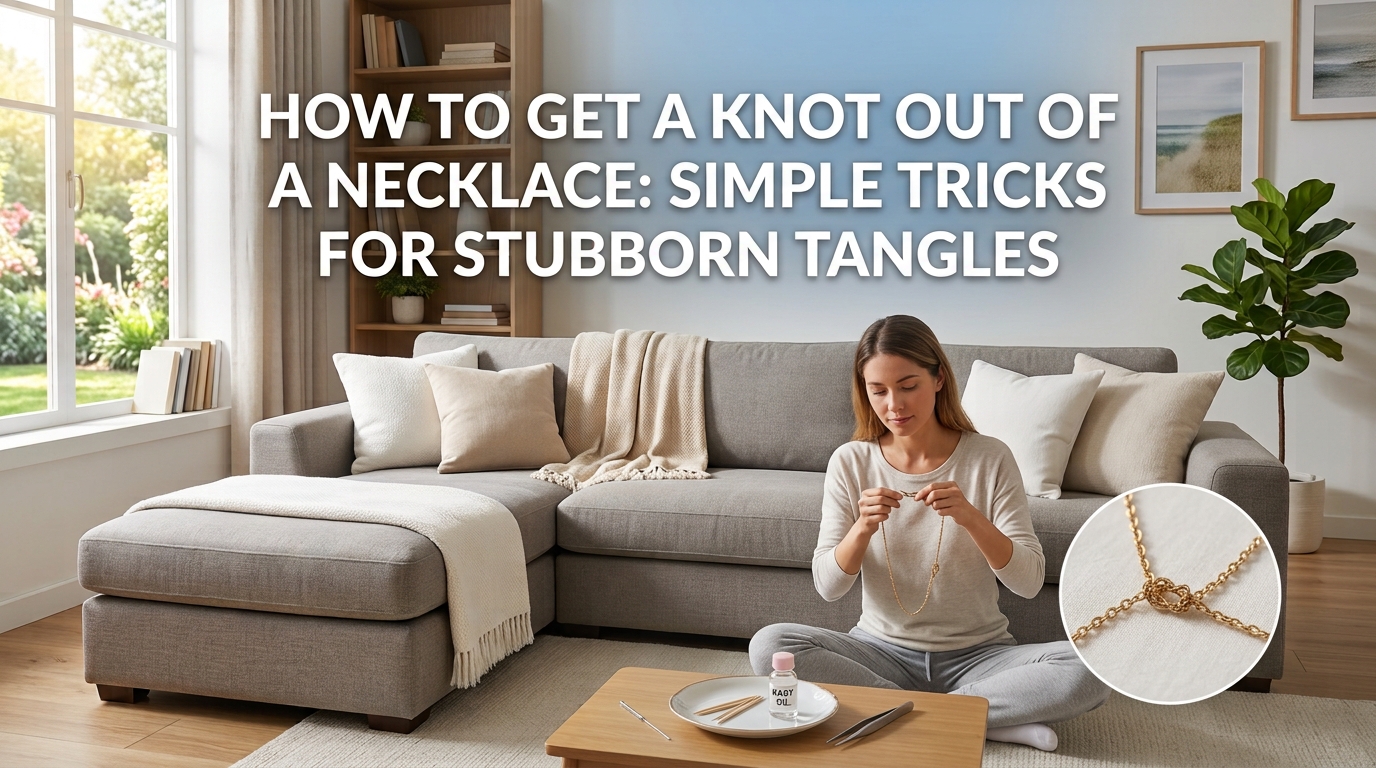
Few moments cause as much sudden frustration as pulling a favorite piece of jewelry from a travel pouch or jewelry box only to find it matted into a tight, chaotic web. When you are rushing to get ready for an event and need to figure out how to get a knot out of a necklace, pulling forcefully at the fine metal links is a natural reaction. However, acting in haste often tightens the snarl further or, worse, snaps a delicate gold or silver chain beyond easy repair.
Delicate jewelry chains are engineered with tiny, interconnected metal loops that move fluidly along a single axis. When these links fold over one another in a confined space, friction causes them to lock together into complex clusters. The thinner the chain gauge, the higher the surface friction between individual links, making delicate box chains, cable chains, and rope chains particularly vulnerable to stubborn snarls.
Resolving this common dilemma does not require expensive equipment or specialized jewelry repair skills. By understanding how friction, surface tension, and metal elasticity interact, you can safely untangle even the tightest clusters using simple household items. This expert guide walks you through the physics of chain entanglements, evaluates safe lubrication mediums, provides clear step-by-step extraction workflows, and outlines preventative care habits to keep your jewelry pristine.
The Physics of Entanglement in Fine Metal Chains
To execute an effective strategy for how to get a knot out of a necklace, it helps to understand why fine metal links lock together so stubbornly in the first place. Fine jewelry chains, especially those made from high-karat gold, sterling silver, or platinum, consist of small, flexible loops designed to flex under movement. When stored loosely, motion causes loops to slip through adjacent gaps, creating a sequence of overlapping friction points that draw the metal tighter together.
As pressure is applied to a tangled cluster, the metallic links compress against each other, eliminating the microscopic gaps needed for individual loops to slide free. Attempting to force the knot open by pulling both ends of the chain outward applies straight linear tension, which actually drives the links deeper into the center of the tangle. This mechanical compression converts a loose loop tangle into a hardened, compacted mass that resists manual separation.
Successful untangling relies on reducing surface friction between the metal links while gently expanding the spaces between individual loops. Rather than pulling the ends outward, the goal is to work from the center of the cluster, applying lateral wiggle movements that create room for loops to slide past one another without stretching or weakening the delicate solder joints.
Preparing a Workspace and Selecting Safe Lubrication Mediums
Before attempting any technique for how to get a knot out of a necklace, establishing a proper workspace and following safe jewelry handling practices is essential for preventing accidental damage and eye strain. Never attempt to untangle delicate jewelry while holding the chain suspended in the air, as gravity pulls down on the loose ends, adding continuous downward tension to the tangle.
Lay the affected item flat on a hard, well-lit surface covered with a smooth white paper towel or a microfiber cloth. A light-colored background provides sharp contrast against dark or reflective metal, making individual links easy to distinguish. Make sure you work in a quiet area with good overhead lighting, and consider using a magnifying glass or smartphone camera zoom to clearly inspect tight clusters.
Applying a safe lubricating agent is a critical step that drastically reduces friction between interlocking metal loops. Mineral oil, baby oil, clear olive oil, or liquid dish soap act as effective lubricants that coat the metal without corroding precious alloys. Avoid using harsh chemical solvents, heavy industrial lubricants, or acidic liquids like vinegar, as these compounds can tarnish sterling silver, dissolve delicate stone settings, or damage porous gems such as pearls, opals, and turquoise.
The Two-Pin Extraction Method for Tight Clusters
When dealing with a tight, compacted snarl, mastering how to get a knot out of a necklace using two thin straight pins or sewing needles offers the highest degree of mechanical control. Sewing needles provide pinpoint accuracy, allowing you to manipulate individual links without scratching adjacent metal surfaces.
Apply a single drop of baby oil or mineral oil directly onto the center of the cluster using a cotton swab. Allow the lubricant to seep into the inner spaces for roughly thirty seconds to coat every interlocking link. Lay the chain flat on your workspace and unclasp the fastener, as opening the clasp relieves internal tension and provides an open end through which loops can eventually untangle.
Insert the sharp tips of two straight pins directly into the center of the tight cluster, keeping the needles parallel to the flat surface. Gently wiggle the pin tips back and forth in opposite directions, applying light outward pressure to loosen the core of the mass. As the cluster begins to open, use one pin to anchor the main body of the knot while using the second pin to tease individual loops outward one by one until the entire length clears.
Utilizing Ultrasonic Vibrations and Baby Powder Alternatives
If liquid lubricants fail to open a stubborn cluster, exploring dry powder lubricants or mild mechanical vibrations provides an effective alternative for how to get a knot out of a necklace. Powders work by reducing surface tackiness between dry metal links without leaving an oily residue that requires heavy washing afterward.
Baby powder, cornstarch, or talcum powder acts as a dry lubricant that reduces friction along fine chain links. Sprinkle a small amount of fine powder over the tangled area and massage it gently into the cluster using your fingertips. The fine powder particles coat the metal loops, allowing them to slide past each other smoothly when gently wiggled with two sewing needles.
When dealing with extremely tight snarls, adding gentle microscopic vibrations helps loosen compacted links. Place the powdered or lubricated cluster onto a small plastic surface resting directly on top of an operating electric toothbrush handle or a vibrating smartphone. The subtle, continuous micro-vibrations loosen the compressed loops from the inside out, causing the cluster to relax and making it significantly easier to tease apart with pins.
Handling Multi-Necklace Entanglements and Layered Chains
Discovering multiple chains fused into a single tangled mass presents a unique challenge that requires a structured, patient approach to figure out how to get a knot out of a necklace set without snapping individual links.
Start by laying the entire matted pile flat on your light-colored surface and unclasping every single necklace in the cluster. Leaving clasps closed creates continuous circular loops that trap other chains inside, multiplying the complexity of the tangle. Identify the thickest, heaviest chain in the bundle first, as removing larger items frees up space and reduces overall weight on delicate companion pieces.
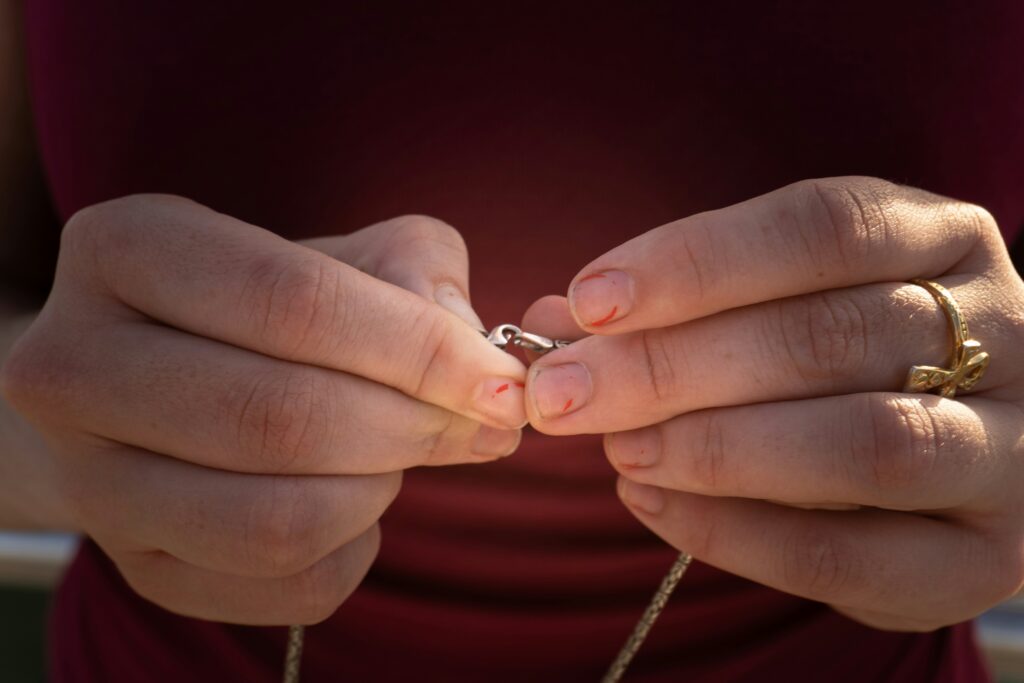
Focus on removing one chain at a time rather than trying to unravel the entire mass simultaneously. Trace the tail end of the outermost chain and work backward toward its center, using baby oil and straight pins to tease it free from the central cluster. Never lift the bundle into the air while working, as the dangling weight of dangling pendants or heavier chains can stretch fine wire links or snap delicate soldered jump rings.
Clean-Up Protocols and Removing Oil Residue
After learning how to get a knot out of a necklace and successfully unraveling the chain, thoroughly cleaning the jewelry is necessary to remove leftover oils, powders, and surface grime. Leaving oil residues on precious metals attracts airborne dust, dead skin cells, and cosmetics, which quickly build up inside link joints and accelerate dulling.
Prepare a small bowl filled with warm water mixed with a few drops of mild, dye-free liquid dish soap. Submerge the untangled chain in the soapy solution and soak it for five minutes to break down residual baby oil or mineral oil. Gently swirl the chain in the water or use a soft-bristled baby toothbrush to clean between individual link openings.
Rinse the necklace under a gentle stream of lukewarm tap water, making sure to place a fine-mesh drain strainer over your sink basin to prevent accidental loss if the chain slips from your hands. Pat the jewelry dry gently using a lint-free microfiber towel, and lay it flat on a clean paper towel to air dry completely before storing or wearing it.
Evaluating Untangling Methods Across Performance Factors
Selecting the right strategy for how to get a knot out of a necklace depends on chain thickness, presence of gemstone pendants, and available household supplies.
The Two-Pin and Baby Oil Method provides maximum precision and leverage for tight clusters on fine gold and silver chains. It is highly effective and safe for plain metal items, though it requires post-cleaning to remove oil residue.
The Baby Powder and Needle Method works exceptionally well for light to moderate snarls on costume jewelry or items with porous gemstones. It leaves no greasy residue and is simple to execute, though it offers slightly less lubrication than liquid oils.
The Micro-Vibration Technique excels at loosening severely compacted, hardened knots before manual pin extraction. It reduces manual effort significantly, though it requires an electronic vibrating device and flat workspace.
Professional Jeweler Service is necessary for delicate vintage chains, severely stretched links, or knots located directly over fragile solder points. While it involves a small service cost, it guarantees professional handling without risk of snapping precious items.
Critical Errors That Can Permanently Damage Fine Chains
When people desperately search for how to get a knot out of a necklace in a rush, they often use risky techniques that cause permanent structural damage to delicate jewelry. Avoiding these common traps protects your cherished pieces from costly repairs.
Never use sharp cutting tools, safety pins with thick shafts, or heavy metal pliers to force a knot open. Thick needle shafts can flatten hollow gold links, distort small jump rings, or scratch polished metal finishes permanently. Always choose fine, thin sewing needles or straight pins designed for delicate fabric work.
Avoid pulling hard on the two free ends of a tangled chain in an attempt to pull the knot out through force. Applying linear tension compresses the cluster further, tightening the snarl and stretching individual wire links past their yield point. Once a metal link stretches, its structural integrity is compromised, making it prone to snapping during future wear.
Refrain from submerging chains containing delicate or organic gemstones, such as natural pearls, emeralds, opals, or turquoise, into heavy liquid detergents, hot water, or chemical solvents without following proper delicate jewelry cleaning tips. Porous gems absorb liquids easily, which can cause internal discoloration, weaken protective surface coatings, or dissolve jewelers’ settings holding stone accents in place.
Long-Term Prevention Strategies to Stop Necklaces from Tangling
Once you have mastered how to get a knot out of a necklace and restored your chain, adopting smart storage and travel habits ensures you will rarely face this frustrating problem again.
The simplest and most effective way to prevent entanglements during travel is utilizing ordinary drinking straws or reusable silicone tubes. Unclasp your necklace, thread one end of the chain through a clean plastic straw, and fasten the clasp on the outside. The rigid straw prevents the flexible chain from folding over itself, keeping it straight and tangle-free inside luggage or travel bags.
For home storage, hang necklaces individually on dedicated jewelry trees, wall-mounted pegs, or soft velvet-lined hanging organizers as part of proper necklace storage and care rather than storing them loose in flat drawers. If you prefer keeping jewelry in boxes, place each necklace inside an individual soft microfiber pouch with the clasp fastened and left hanging slightly outside the pouch opening.
When wearing multiple layered chains, use a multi-strand necklace clasp separator to keep individual chains spaced evenly apart across your neckline. These small magnetic or slide-lock separators hold chains at fixed distances, preventing fine links from twisting around each other as you move throughout the day.
Frequently Asked Questions
1. Can I use olive oil or vegetable oil to untangle a necklace?
Yes, kitchen oils like olive oil, canola oil, or mineral oil work well as lubricants to reduce friction between tight metal links. However, be sure to wash the chain thoroughly with warm soapy water afterward to remove all organic oil residue.
2. What should I do if a knot is right next to a fragile clasp or stone setting?
Work with extreme caution using a single thin needle, focusing on moving links away from the fragile setting. If the knot is bound tightly around delicate prong settings or solder joints, take the piece to a professional jeweler to avoid snapping the assembly.
3. Why do thin gold and silver chains tangle so easily?
Thin chains have a small mass and high surface friction relative to their size, making them prone to shifting. When stored loosely, slight movements cause adjacent links to slip through loops, quickly creating tight friction clusters.
4. Will baby powder ruin sterling silver or gold jewelry?
No, standard baby powder, cornstarch, or talcum powder is chemically inert and will not scratch or damage precious metals. It acts as a gentle dry lubricant and rinses away easily with warm water.
5. Is it safe to use a safety pin to untangle a delicate necklace?
Safety pins can be used if no sewing needles are available, but ensure the pin shaft is extremely fine. Thick safety pins can bend or deform microscopic chain links, so very thin straight pins remain the safest choice.
6. How much does a jeweler typically charge to untangle a necklace?
Many local jewelers offer quick untangling services for a minimal fee, or even for free as a courtesy to regular customers. Complex, multi-chain entanglements requiring repair work may involve a modest service charge.