By the time a diver notices heavy legs or can only hold his breath for a shorter time, it is too late. Judgement is already worse than swimming slowly. This happens because fatigue is building up during the session through heat loss, inefficient propulsion, slight dehydration and lack of adequate recovery breaks.
These four loads are continually sucked out of the diver over a long session. Managing them to keep a constant level of performance to the end of the session is what is meant by ‘tapering’ rather than ‘reduction’.
Thermal load sets the ceiling on everything else
Water loses heat faster than air. The energy to keep core temperature equal to ambient is continually expended by your body and this energy use goes up as you become gradually more cold. Even very mild shivering will burn up a lot of your glycogen stores and greatly increase your oxygen consumption. By the time you notice you are getting cold, your body is already working harder to swim at the same speed.
Matching insulation to the real thermal profile
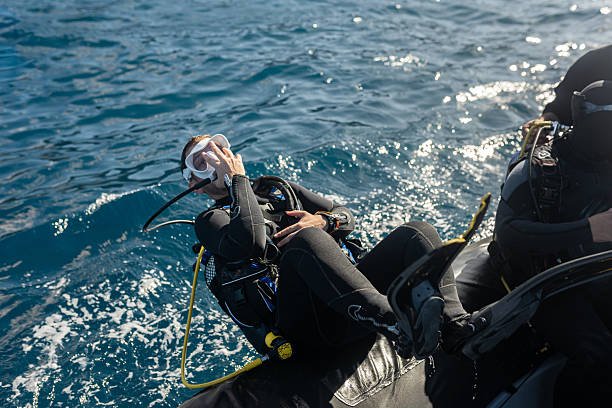
It is very important to choose a wetsuit for the coldest part of your session not for the average temperature of your dive. Take into account the depth of the thermocline, the current, wind on surface as well as the portion of time you will spend on land between your dives. For breath-hold work it is worth investing in a well-cut open cell spearfishing wetsuit, because it does not flush and stays thinner and far more flexible than a jacketed suit of equivalent warmth.
Typically, divers fail to understand the importance of a good fit of their wetsuit. A bad fit causes repeated water exchange which has to be reheated afterwards. This can easily lead to 1-2cm of water between skin and wetsuit.
| Water temperature | Typical configuration | Practical session ceiling before heat debt | Recovery requirement |
| 24 degrees and above | 1.5 to 3 mm, hood optional | Three to four hours | Shade and fluids only |
| 19 to 23 degrees | 3 to 5 mm, hooded | Two to three hours | Dry top between drifts |
| 15 to 18 degrees | 5 to 7 mm, hooded, gloves | Ninety minutes to two hours | Warm fluids, full exit |
| Below 15 degrees | 7 mm or drysuit with undergarment | Sixty to ninety minutes | Active rewarming before re-entry |
Movement efficiency buys hours, not minutes
Drag, the opposition to the diver, rises at a rate proportional to the square of the speed of the diver. Most fatigue is avoidable and occurs because of the way the diver is using the water rather than the distance he or she is travelling.
Trim, weighting and the silent correction tax
When an over-weighted diver tries to hold a steady position he is constantly making tiny corrections to remain in the right position. Weigh yourself up at the end of the dive, when all suit compression and gas consumption have passed, and see how much heavier you have become during the dive. Work at neutral buoyancy at the depth of the dive. This means that your body must be as straight as a rod, with your head in the correct position in relation to your spine.
Kick selection and cadence
The slow full arm-length kick that long fins allow is best performed with a big hip drive. Short arm-active kicks that use a lot of quadriceps and calf muscle generate lots of lactate without propelling you through the water. Three key things to change.
- Drop cadence and lengthen the stroke until propulsion feels unhurried, then hold that rhythm regardless of conditions.
- Glide deliberately after each kick cycle on descent, rather than kicking continuously to the bottom.
- Switch kick styles across the session, using frog kick for transit and flutter only when current demands it, to spread load across muscle groups.
Hydration and fuelling under immersion conditions
By the time you notice that you are sweating your wetsuit will have trapped the moisture and you will be unaware of the slow dehydration that is taking place. In spearfishing the loss of body fluids as a result of immersion can range from 2% to 3% in cold water. This will impair your endurance as well as your ability to thermoregulate.
A practical fluid and fuel schedule
- Drink 400 to 500 millilitres of water with electrolytes in the hour before entry, finishing twenty minutes out.
- Take 200 to 250 millilitres at every surface interval, warmed in cold conditions.
- Eat small, carbohydrate-led amounts every sixty to ninety minutes rather than one large meal, which diverts blood to digestion.
- Avoid alcohol the night before and limit caffeine on the day, since both worsen fluid balance.
Structuring rest intervals before fatigue forces the issue
By scheduling in regular breaks of approximately 10 minutes out of the water for every 90 minutes spent in the water, you can reap greater returns from your time spent recovering than by allowing slow decline to occur in the first place. This scheduled recovery time needs to be strictly adhered to even when the conditions are providing exceptional diving.
Objective markers for ending a session
The amount of time you have to spend in the water to dive well in the following days is the real measure of a good session. Self assessment when fatigued is notoriously poor, and it’s better to pre-agree on some external markers of failure with your buddy, eg continued shivering after the dive, an elevated recovery breath hold for longer than usual, an inability to find your own gear, forgetfulness of parts of the dive.