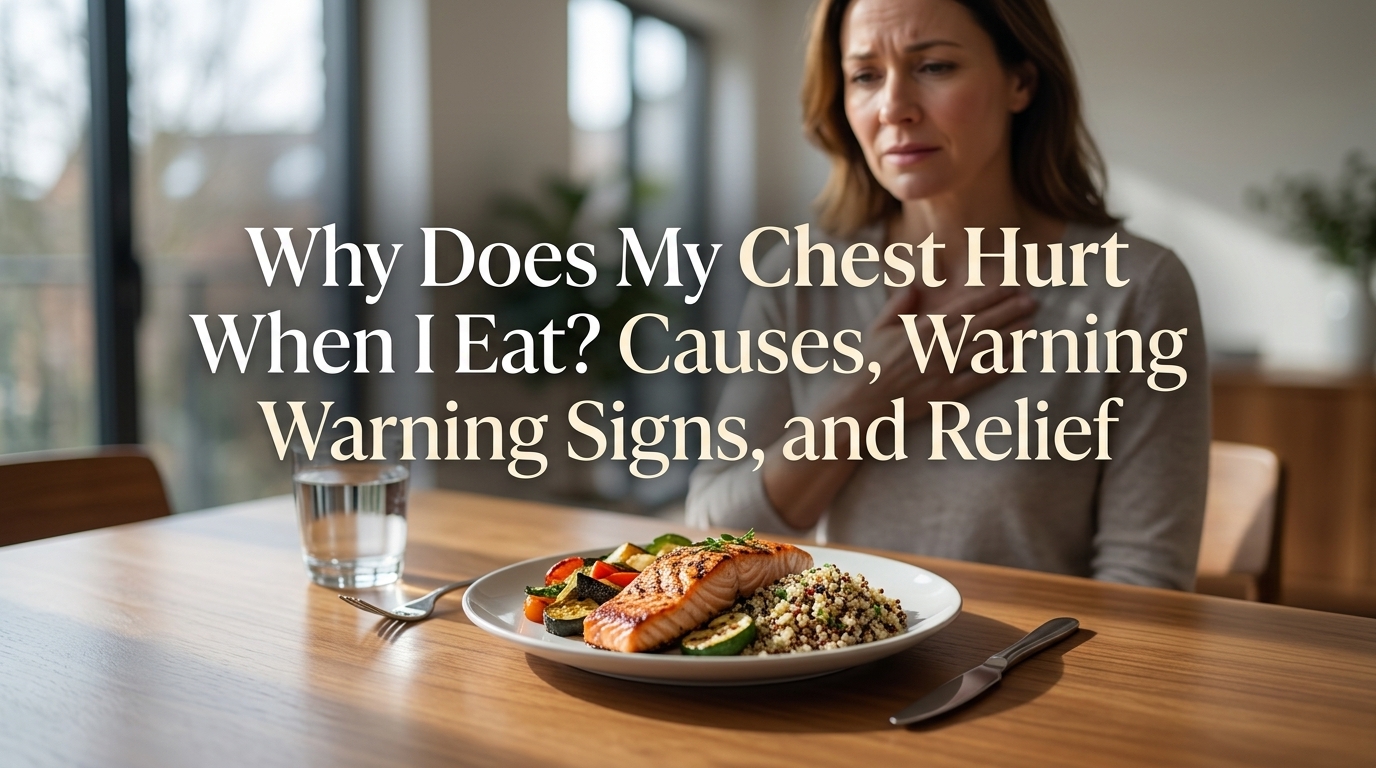
Experiencing chest discomfort during or immediately after a meal can be alarming. When asking yourself “why does my chest hurt when i eat,” it is important to recognize that chest pain linked to food intake typically stems from the gastrointestinal system, though cardiovascular and musculoskeletal causes must always be ruled out first.
Because the esophagus and the heart lie close to each other in the chest cavity and share overlapping nerve pathways, GI distress can easily feel like a cardiac event. Understanding the specific mechanisms behind why does my chest hurt when i eat can help you identify symptoms, know when to seek medical attention, and find effective relief.
Important Safety Warning: GI vs. Cardiac Symptoms
Because chest pain can indicate a cardiac emergency, always evaluate your symptoms against these warning signs of a heart attack:
| Symptom Characteristic | Likely Gastrointestinal Cause | Possible Cardiac Emergency (Seek Emergency Care) |
| Trigger | Swallowing food, lying down after eating, large meals | Physical exertion, emotional stress, unprovoked |
| Pain Quality | Burning, sharp, squeezing in upper abdomen/mid-chest | Heavy pressure, crushing tightness, “weight on chest” |
| Radiation | Travels up toward throat or mouth (acid taste) | Radiates to left arm, shoulder, neck, jaw, or back |
| Associated Symptoms | Regurgitation, bloating, difficulty swallowing | Shortness of breath, cold sweats, dizziness, nausea |
| Response to Antacids | Often temporary relief within 15–30 minutes | No relief from antacids |
1. Gastroesophageal Reflux Disease (GERD) and Heartburn
The most frequent answer to why does my chest hurt when i eat is Gastroesophageal Reflux Disease (GERD) or acute acid reflux.
┌──────────────────────────────────────────────────────────────────────────┐
│ MECHANISM OF ACID REFLUX & CHEST PAIN │
├──────────────────────────────────────────────────────────────────────────┤
│ │
│ [Lower Esophageal Sphincter (LES) Weakness] ──► LES Fails to Close │
│ │ │
│ ▼ │
│ [Stomach Acid Reflux] ──► Acid Backs Up Into │
│ Esophagus │
│ │ │
│ ▼ │
│ [Mucosal Irritation] ──► Acid Irritates Sensitive │
│ Esophageal Lining │
│ │ │
│ ▼ │
│ [Retrosternal Chest Pain] ──► Produces Burning Pain │
│ Behind Sternum │
│ │
└──────────────────────────────────────────────────────────────────────────┘
Upon swallowing, a muscular sphincter, located at the end of the esophagus and known as the LES or Lower Esophageal Sphincter, opens and closes to allow food to enter the esophagus, and then relaxes to allow it into the stomach. This closes tight after swallowing if the LES has functioning muscles and appropriately constricts after passing the stomach, preventing harsh digestive enzymes and acidic stomach fluids from flowing backwards into the esophageal mucosa layer of the esophageal tube.
2. Esophageal Motility Disorders and Spasms
When evaluating why does my chest hurt when i eat, doctors frequently check for motility disorders where the esophageal muscles fail to contract smoothly.
- Esophageal Spasms: Smooth muscles in the esophagus contract in an uncoordinated, abnormally intense manner. These spasms can cause severe, crushing chest pain that closely mimics a heart attack.
- Nutcracker (Jackhammer) Esophagus: High-pressure, coordinated muscular contractions occur during swallowing, resulting in painful cramps in the chest during meals.
- Achalasia: A rare nerve-related condition where the LES fails to relax and normal esophageal peristalsis (propulsive squeezing) is lost, causing food to collect in the esophagus.
3. Hiatal Hernia
A hiatal hernia occurs when the upper part of the stomach pushes upward through the diaphragm muscle into the chest cavity.
┌──────────────────────────────────────────────────────────────────────────┐
│ HIATAL HERNIA MECHANISM │
├──────────────────────────────────────────────────────────────────────────┤
│ │
│ [Increased Abdominal Pressure] ──► Upper Stomach Pushes Through │
│ Diaphragm Aperture │
│ │ │
│ ▼ │
│ [Displaced LES Position] ──► LES Can No Longer Seal Properly │
│ │ │
│ ▼ │
│ [Severe Post-Meal Reflux] ──► Stomach Acid & Food Pool Above │
│ Diaphragm, Causing Chest Pain │
│ │
└──────────────────────────────────────────────────────────────────────────┘
Because the diaphragm normally helps support the LES, a hiatal hernia compromises this barrier. When you eat a substantial meal, the enlarged stomach presses into the chest cavity, triggering localized pressure, pain, and severe acid reflux.
4. Eosinophilic Esophagitis (EoE) and Food Impaction
If you consistently ask why does my chest hurt when i eat solid foods like meat or bread, Eosinophilic Esophagitis (EoE) symptoms may help identify the underlying cause.
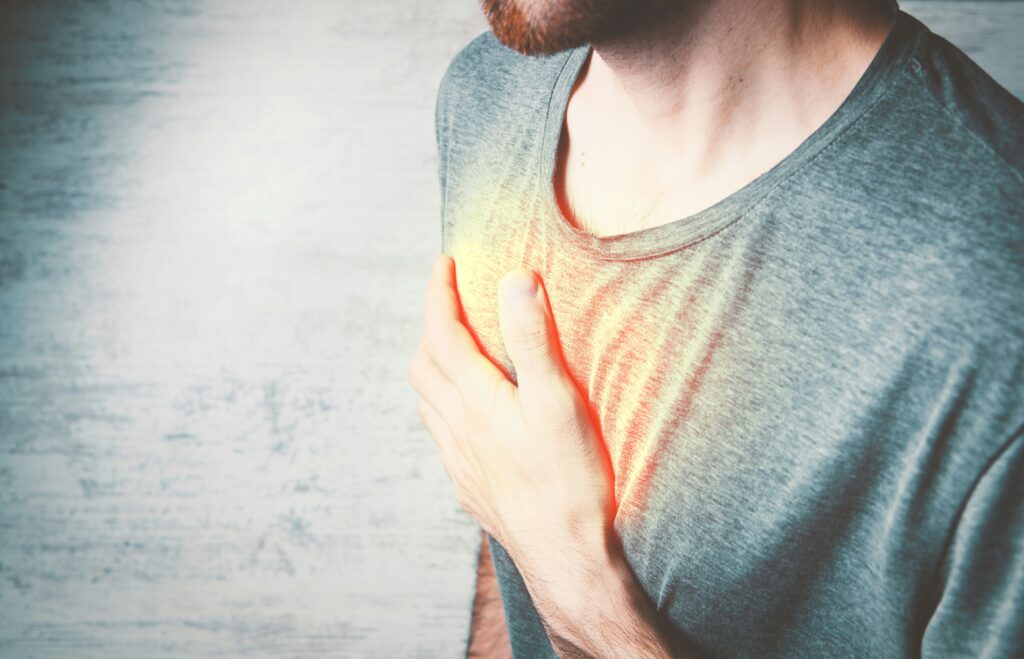
EoE, also known as eosinophilic esophagitis, is a type of allergic inflammatory disorder. It’s diagnosed when the number of white cells called eosinophils in a patient’s esophageal lining becomes too high. This frequently results from Food sensitivity to dairy, grain, soy, and many others and the inflammation that is chronic from these allergies leads to: hardening of esophageal lining stiffening (or stenosis) development of esophageal rings difficulty with swallowing increased chance of food being “stuck”
5. Esophagitis, Ulcers, and Infections
Inflammation of the esophageal lining—known as esophagitis—can turn the routine act of eating into a painful experience.
┌──────────────────────────────────────────────────────────────────────────┐
│ COMMON CAUSES OF ESOPHAGITIS │
├─────────────────────────┬────────────────────────────────────────────────┤
│ CAUSE OF ESOPHAGITIS │ TYPICAL TRIGGER / RISK FACTOR │
├─────────────────────────┼────────────────────────────────────────────────┤
│ **Pill-Induced** │ Swallowing medications (NSAIDs, antibiotics, │
│ │ iron) with insufficient water before lying down│
│ **Infectious** │ Fungal (Candida) or viral (HSV, CMV) infections│
│ │ in immunocompromised individuals │
│ **Peptic Ulcers** │ Esophageal or gastric mucosal erosions caused │
│ │ by chronic acid exposure or *H. pylori* │
└─────────────────────────┴────────────────────────────────────────────────┘
When swallowed food rubs against raw, inflamed esophageal tissue, it triggers a sharp, localized pain behind the breastbone.
6. Gallbladder Disease and Biliary Colic
Although the gallbladder rests in the upper right abdomen below the liver, gallbladder issues are a classic reason why does my chest hurt when i eat rich, greasy, or high-fat meals.
┌──────────────────────────────────────────────────────────────────────────┐
│ BILIARY COLIC & REFERRED CHEST PAIN │
├──────────────────────────────────────────────────────────────────────────┤
│ │
│ [Ingestion of Fat] ──► Cholecystokinin (CCK) Signals Gallbladder │
│ to Contract │
│ │ │
│ ▼ │
│ [Gallstone Obstruction]──► Stone Blocks Cystic/Bile Duct │
│ │ │
│ ▼ │
│ [Referred Pain] ──► Visceral Nerves Radiate Pain Upward into Mid- │
│ Chest and Right Shoulder Blade │
│ │
└──────────────────────────────────────────────────────────────────────────┘
When you consume fatty foods, the gallbladder contracts to release bile for digestion. If gallstones obstruct the bile duct, the resulting pressure triggers pain that frequently radiates into the center of the chest or behind the right shoulder.
7. Gastritis and Peptic Ulcer Disease
Inflammation of the stomach lining (gastritis) or open sores in the stomach/duodenum (peptic ulcers) explain why does my chest hurt when i eat acidic, spicy, or heavy foods.
Eating stimulates the stomach to produce hydrochloric acid to digest food. If the protective mucus layer of your stomach is eroded—due to H. pylori infection or chronic NSAID use (such as ibuprofen or aspirin)—this newly produced acid burns the raw stomach lining, causing pain that radiates upward into the lower chest.
8. Gastric Volvulus and Delayed Gastric Emptying (Gastroparesis)
Delayed stomach emptying (gastroparesis) in this condition causes you food to remain in your stomach longer than is normal. In most cases of diabetes (neuropathy), gastric volvus can result in considerable abdominal expansion , swelling and sharp pain that feels like its compressing your chest and it may happen even after eating relatively low quantities of food. Occasionally, in some people Gastric volvulus ( twisting of stomach can lead to severe constipation due and make a hole in it and makes them have really sharp and severe chest pain along with retching and inability to swallow anything.
9. Musculoskeletal and Postural Strain
If you wonder why does my chest hurt when i eat while sitting slumped over or immediately after lifting heavy objects before a meal, musculoskeletal conditions like costochondritis (inflammation of the cartilage connecting your ribs to your breastbone) may be responsible.
Sitting in a hunched position while eating increases intra-abdominal pressure, pushing organs upward against an already inflamed rib cage and causing chest tightness during digestion.
10. Angina and Postprandial Cardiac Workload
While digestive issues cause most post-meal chest pain, cardiac triggers must never be ignored.
┌──────────────────────────────────────────────────────────────────────────┐
│ POSTPRANDIAL ANGINA MECHANISM │
├──────────────────────────────────────────────────────────────────────────┤
│ │
│ [Large Meal Consumed] ──► Blood Shunted to Digestive Tract │
│ (Splanchnic Hyperemia) │
│ │ │
│ ▼ │
│ [Heart Workload Rises] ──► Heart Rate & Output Increase to Compensate │
│ │ │
│ ▼ │
│ [Coronary Artery Risk] ──► Narrowed Arteries Cannot Supply Enough Blood │
│ │ │
│ ▼ │
│ [Angina Triggered] ──► Oxygen-Deprived Heart Muscle Causes Pain │
│ │
└──────────────────────────────────────────────────────────────────────────┘
After you eat a large meal, your body redirects significant blood flow to your stomach and intestines to support digestion (a process called splanchnic hyperemia). To compensate, the heart may beat faster and pump more forcefully. If you have underlying coronary artery disease with narrowed arteries, this increased workload can restrict blood flow to the heart muscle, triggering postprandial angina (chest pain after eating).
Step-by-Step Diagnostic and Management Guide
If you are trying to understand why does my chest hurt when i eat and your doctor has ruled out cardiac emergencies, follow these steps to manage symptoms:
1.Step 1: Consult a Healthcare Professional for Evaluation:Medical Assessment.
Make an appointment with your family physician or a gastroenterologist. When you have your appointment, be ready to answer questions about when the pain starts in relationship to meals, what kind of food makes it worse and what else you might be experiencing, such as problems swallowing.
2.Step 2: Undergo Targeted GI Diagnostic Tests:Diagnostic Testing.
You doctor may also order other tests including: Upper Endoscopy EGD Upper endoscopy can be used to directly view the lining of the esophagus and stomach Esophageal Manometry Test Esophageal manometry can be performed to evaluate muscle contractions in the esophagus Barium Swallowing Test You doctor can order a barium swallowing study can determine structural abnormalities in the esophagus and swallowing passage
3.Step 3: Modify Eating Habits and Meal Portions:Dietary Adjustments.
Switch to smaller, more frequent meals throughout the day rather than two or three large ones as part of a GERD-friendly eating plan. Avoid known reflux triggers such as high-fat foods, chocolate, caffeine, citrus, tomatoes, mint, and alcohol.
4.Step 4: Maintain an Upright Posture After Meals:Postural Habits.
Avoid sleeping or laying in bed, slouching, or taking in any form for the 2-3 hrs after having the evening meal – Do not eat late snacking between 3-hour of bed time. Remain sitting or standing with upright position of the body 2-3 hours after food intake.
Summary and Key Takeaways
To review why does my chest hurt when i eat:
- Acid Reflux & GERD: When stomach acid moves upward into the esophagus, it may cause burning or discomfort in the chest.
- Esophageal Motility Issues: Muscle spasms or conditions like achalasia prevent smooth swallowing.
- Hiatal Hernia: A portion of the stomach slips into the chest, increasing post-meal pressure and reflux.
- Inflammation & Allergy: Esophagitis, peptic ulcers, and allergic EoE inflame digestive tissues.
- Gallbladder & Stomach Disease: Gallstones and gastritis trigger referred pain into the chest after eating.
- Cardiac Workload: Digesting large meals demands increased blood flow, which can trigger postprandial angina in individuals with underlying heart disease.
By making key lifestyle adjustments, getting a professional evaluation, and listening to your body’s signals, you can pinpoint the cause of post-meal chest pain and take steps toward lasting relief.