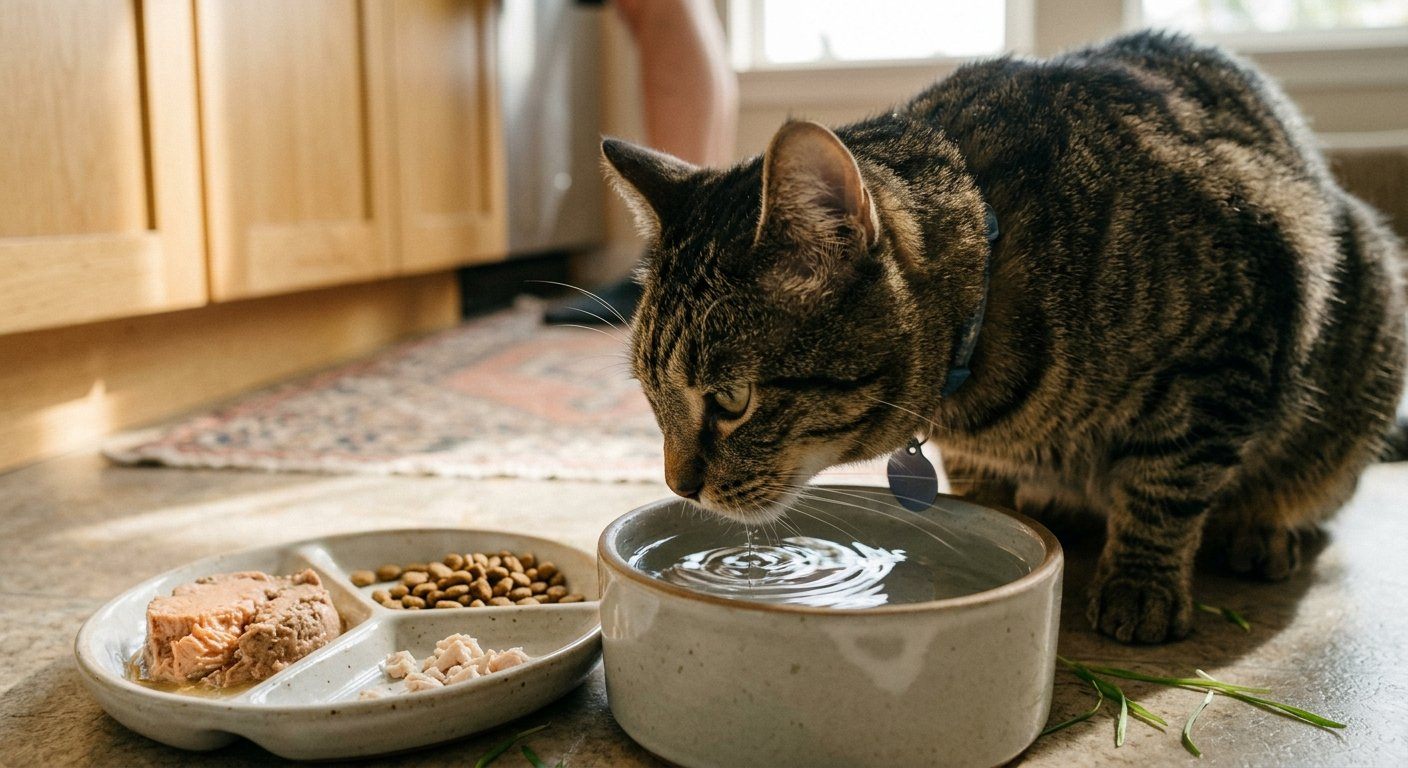
If you are wondering, why is my male cat drinking so much water, the important issue is not simply how often he visits the water bowl. A noticeable increase in thirst can reflect something as straightforward as a diet change or warmer weather, but it can also occur when the kidneys, thyroid gland, pancreas, or hormones are not functioning normally.
Because cats tend to hide illness well, a change in drinking or urinating might be an important hint. Increased drinking especially becomes important if accompanied by the other physical changes: weight loss, hyperphagia, large urination spots, vomiting, lethargy,or litterbox changes. The fact that the cat is male does not alone result in excessive drinking.
However, males face a unique and important other urinary health problem that the owner should know about: urethral obstruction.
The male cat who is straining, urinates very little or nothing, and repeatedly visits the litterbox, has an emergency and he needs to see the veterinarian now. This guide will cover the most important things an owner should know about excessive drinking and what sorts of tests and signs demand attention from the vet.
What Counts as “Drinking Too Much” for a Cat?
Water – it does’t matter the amount If water output changes by more than is considered “normal,” or if drinking changes as well-in increases or decreases- it indicates problems. We’re looking for change in your pet, the degree of your pets “change” and by what amount. …But there isn’t a specific amount per per cat that establishes a “high normal” and anything above becomes an alarming number.
Different cats needs different amounts.
For example. A 10 lb eating canned food may get 2 of those 4 Oz’s “free” from food-so would get water by a bowl; vs a 10 lb a eating of the dry food needs that get water from bowl 5oz at a min; A great baseline estimate for a healthy pet would to be about 4 Oz/ 5 lbs of animal, but all Pets vary. The fact that your pet drank water and will need it in a few hours- or just passed by and gave a quick drink -that makes nothing. However an” change,” is key .
For example, you may notice that he:
- empties his water bowl much faster than before;
- seeks water from sinks, showers, or other unusual places;
- repeatedly returns to the water bowl;
- produces much larger urine clumps;
- urinates more frequently;
- drinks noticeably more after a change from wet to dry food.
A sustained increase is more concerning than a single day of heavy drinking after unusually hot weather or increased activity.
Why Is My Male Cat Drinking So Much Water? The Most Likely Causes
Increased thirst is referred to as polydipsia and increased urination as polyuria. The two can be related because the kidney loses so much fluid in a polyuric state that to compensate, the cat drinks more, so the cat first drinks excess fluid which then causes the increased urination. However it may also be an under-lying disease state which initially increases the water intake which then causes increased urination.
1. Chronic Kidney Disease
Kidney disease is one of the most important causes to consider, particularly in an older cat.
Normal, healthy kidneys are able to concentrate the urine, effectively maintaining a steady level of water in your cat’s body. As chronic kidney disease develops, these organs will become less efficient at concentrating urine, and your cat will lose relatively more water in their urine and may begin drinking more. Your cat may present initially with only a slight change, such as drinking more water and urinating outside of their litter pan a few times before they begin showing additional symptoms like weight loss, decreasing appetite, a rougher coat, the tendency to vomitin any or all combinations.
The “drinking more” should never be automatically assumed to be old age.
Your vet can take Blood Chemistry,Urinalysis andotherappropriate tests to assess your cat kidney health.
2. Diabetes Mellitus
Another significant cause for enhanced thirst and urination is Diabetes mellitus.
In cases of feline diabetes mellitus, persistently high blood glucose spills into the urine, pulling water from body tissues via osmotic pressure.. This extra urine is voided causing the cat to drink to replace lost fluids. The most common presentation is:
Increased thirst, increased urination, and weight loss despite a good appetite.
Diabetes is particularly worth considering when a cat is overweight or has other risk factors. Cornell notes that obesity, increasing age, inactivity, male sex, and glucocorticoid use are among identified risk factors for feline diabetes.
However, thirst alone cannot diagnose diabetes. A veterinarian generally looks at blood glucose, urine glucose, the cat’s clinical signs, and sometimes fructosamine testing because stress can temporarily raise a cat’s blood glucose in a veterinary setting.
3. Hyperthyroidism
Middle-aged to aging cats are very likely affected. An over-producing thyroid gland causes the metabolic rate of the whole body to rise; such cats are typically weight-losing, eating well or even a lot, thirstier than usual, and urination seems too frequent. Other potential signs may be more “active” demeanor, more voice, vomiting or diarrhea, a “unkempt” look of the hair and coat as well as faster heart rate.
Hyperthyroidism can easily coincide with kidney disease, hence diagnosis has priority over targeting the more obvious symptom alone.
Standard diagnosis and follow-up in cases of feline hyperthyroid cases includes screening total T4 level with an physical exam and blood work and urinalysis. Additional tests may need to be submitted to evaluate total T4 in particular in a case where test value don’t reflect obvious clinical situation (Cornell university) .
4. Diet Can Make a Cat Appear to Drink More
The increased consumption of drinks is not disease. Water may come in a different amount due to the variation in diet from wet food in a can into dry kibble. A cat who consumes primarily dry food, then your cat requires more fluids from drinking alone from his bowl.
Environmental conditions may also play role in determining how a healthy cat drink.
It could happen that the changes of an environment like heat and also activity level affects body temperature and thus water consumption amount will not be the same like before. Therefore there exists certain difference. First kind is because his consumption will be greater because the lack of water through the change of diet and then the other one because your cat may actually drink more water to compensate for lose of more water through urine. Thus food variations always will be a part of an analysis in the case of this type of situation.
5. Liver Disease and Other Metabolic Problems
Abnormal electrolyte levels as well as some of other diseases (of the metabolism, of the liver, etc) could also lead to increased drinking and urination, respectively.
The VCA is giving kidney problems, liver diseases, high blood calcium levels, some endocrine diseases, some cancers, electrolyte imbalance and some drugs as potential causes of increased drinking and urinating.
It is evident how unreliable the guess of a diagnosis can be in itself, based on thirst, as this wide range of causes suggests several different processes, producing the same sign.
Two different cats, one suffering from diabetes and the other with kidney disease, may drink abnormally large amounts of water; their therapeutic approaches would consequently be totally different.
6. Medications Can Increase Thirst
Some medications can affect thirst and urine production.
VCA specifically identifies corticosteroids, certain anticonvulsant medications, and diuretics as examples of drugs that may contribute to increased thirst and urination.
If your male cat recently started, stopped, or changed the dose of a medication, tell the veterinarian. Do not discontinue a prescribed medication simply because you suspect it is responsible for increased drinking.
The timing of the change can be an important diagnostic clue.
7. Rare Causes Are Possible
Rarer medical conditions can cause excessive thirst.
Diabetes insipidus is a rare disorder of water balance and cats with this condition can drink huge amounts and produce huge volumes of very dilute urine.
Primary or behavior, drinking in excess may occur but is usually considered after excluding the more common causes.
The take-home message is not to suspect the obscure before having searched for the common.
Why Increased Drinking and Increased Urination Often Occur Together
The relationship between thirst and urine production is probably the most helpful piece of the puzzle.
Think about the situation where a cat is suddenly excreting very dilute urine. More water will be lost to the environment.The lack of fluid will be perceived by the body, which will then stimulate a need to drink. More water will be consumed in an effort to replace that lost to urine.
The opposite can happen too – changes in metabolism can mean that the body is not getting rid of water properly and will start drinking more and so passing more water.
This is why history of intake and output, changes in cat litter tray habits, and a physical examination along with blood tests and a Urinalysis, is what vets most commonly investigate with this problem.
What Does His Litter Box Tell You?
The litter box can provide some of the most useful information.
If your cat is urinating more as well as increasing amounts in the litter box that is a different phenomenon from the seemingly multiple trips to the box producing only a tiny amount each time. As a reference, Merck Veterinary Manual indicates that normal urine volume for cats ranges from about 10-20 mL/ kg of body weight per day, though these and other figures can vary and many will show exceptions. Much more importantly, the production of large volumes of urine is more indicative of kidney disease or diabetes compared to an increased incidence in trying to urinate and producing very little, or no urine.
Male Cats Have One Important Urinary Emergency
This point becomes more critical if your patient has a male cat. Straining male cats who may be entering the litter box multiple times, whining or yowling, licking their genital area and producing few drops of urine, or no urine have urethral obstruction. This can occur much easier in males due to having longer narrower urethras as compared to female cats.
Urethral obstruction totally blocks the bladder’s contents, leading to toxic fluid and electrolyte imbalances very quickly.
In Cornell terms, urethral blockage is a “real medical emergency!Owners may assume that because the cat is repeatedly walking into and out of the litter box, the increased box use simply means the cat is urinating and defecating more because it is drinking more water. If your male cat is entering into the litter box over and over and little or no urine appears as the output from that effort, don’t watch and see what happens or if fluid intake “ corrects” the issue, as that could be a delay of critical time for that particular patient.
Other Signs That Make Excessive Drinking More Concerning
Increased thirst deserves greater attention when it occurs with other changes.
Watch for:
- unexplained weight loss;
- increased appetite or a sudden change in appetite;
- substantially increased urination;
- vomiting or diarrhea;
- lethargy or weakness;
- poor coat condition;
- changes in behavior;
- repeated litter-box trips;
- blood in the urine;
- painful urination;
- reduced urine production;
- sudden changes in general appearance.
Cats can conceal illness surprisingly well, so subtle combinations of changes may be more meaningful than one dramatic symptom.
How a Veterinarian Determines the Cause
There is no single test that explains every case of excessive drinking.
The diagnostic process typically starts with a complete history and physical examination of the cat. Your veterinarian will ask about such things as how much the cat drinks, what his diet is, how often he urinates, whether his appetite has changed and if he has lost weight, and if he is taking any medications or supplements. It may be helpful for you to measure the amount that your cat drinks within a 24-hour period.
Blood Testing
The blood chemistry screen can give us some indication as to kidney function, blood glucose, liver related abnormalities, electrolytes etc. Kidney disease can be suggested if the urea and creatinine are raised, and diabetes would be suggested if the blood glucose were raised; and the clinical exam and urinalysis should correlate with these findings.
Urinalysis
Urinalysis is particularly valuable because it evaluates how concentrated the urine is and can reveal glucose, blood cells, inflammatory changes, and other abnormalities.
Dilute urine combined with other findings can help explain why the cat is losing so much water. Glucose in the urine can support suspicion of diabetes, while blood or inflammatory cells may point toward urinary tract disease or another urinary problem.
Thyroid Testing
In an older cat with weight loss, increased appetite, increased thirst, or increased activity, a veterinarian may test total T4 to investigate hyperthyroidism.
Additional tests may be selected according to what the initial examination reveals.
What You Can Do Before the Appointment
If your cat’s increased drinking is ongoing and his condition is stable, collect relevant data instead of trying to self-diagnose.
Estimate the amounts of water put into his bowl and remaining in it after 24 hours. If he drinks from several sources, try to take all into account as best you can.
Note if he eats wet or dry food, or both; if his appetite has or has not been normal; if there seems to be weight gain or loss; and if urine clumps are becoming larger or more abundant.
Do not cut off water supply to determine if he can “drink normally”; if he is overdrinking due to fluid loss, denial of water can lead to severe dehydration. Fresh water should be available at all times.
When Should You Contact a Veterinarian?
A sustained or obvious increase in your cat’s water consumption should warrant conversation with your vet; especially if it’s accompanied by signs such as frequent urination, weight loss, appetite changes, vomiting, lethargy or changes in behavior. They are particularly concerned if your cat is peeing very little or not at all, is straining repetitively in the litter box, vocalizing when peeing or becomes increasingly uncomfortable or anxious. Male cats are prone to a condition called a urethral obstruction that needed veterinary attention ASAP. Your cat that cannot pee should NOT be watched in your home to see if he’ll be better tomorrow.
Common Misunderstandings About Excessive Drinking
One misconception is that drinking more always equals kidney disease. While it’s a good possibility, many disorders like diabetes mellitus, hyperthyroidism, drug effects, certain diets, liver failure, electrolyte disturbances etc. Can create signs quite similar to kidney disease. Not all of that drinking leads to kidney failure as a primary process. In addition, thinking, “My cat must be thirsty,” when one sees his cat drinking so much, misses the point that a cat who drinks a lot may do so in part to compensate for the massive amount of urine they are already excreting.
Finally, an easily confused concept is the one between – Frequent urinations. We should compare and contrast this with another common set of signs – Excessive attempts to urinate or the straining to urinate syndrome. These two conditions, While related to each other both are fundamentally and clinically distinct problems. Comparing the one versus the other will provide for the veterinary clinician a critical piece of diagnostic information in a male cat for instance.
The Bottom Line
So, why is my male cat drinking so much water? The answer can range from a simple change in moisture intake to important medical conditions such as chronic kidney disease, diabetes mellitus, or hyperthyroidism. Increased drinking is not specific enough to identify the cause on its own.
Best clues – all about the rest of it; amount of urine, loss of weight, changes in appetite, age, what the cat is eating, medication, presence of other symptoms. Several different diseases can mimic increased drinking and urination, so continued symptoms must prompt a veterinarian. Blood tests and urinalysis are key in making this happen.
And – because it is a boy – a critical, yet unrelated, warning; trouble urinating (straining with no or very little urination) is an emergency.
Don’t confuse that with an increase in intake/output.
8. FAQs
1. Is it normal for a male cat to drink a lot of water?
Drinking for some cats: A particular quantity means little to individual cats – activity levels, body condition, environment and diet all play a role. A recent drastic or prolonged deviation of your cat from typical drinking behaviour is important, rather than a fixed number, For more tips on a cat not drinking enough of their water, make the move and give a dry eating cat more in their bowl than for a wet eating food can.
2. Does drinking lots of water always mean my cat has kidney disease?
No. Kidney disease is an important cause, but diabetes, hyperthyroidism, liver disease, certain medications, electrolyte abnormalities, and other conditions can also cause increased thirst and urination. Testing is needed to distinguish among them.
3. Why is my male cat drinking more water but acting normal?
Some medical conditions cause increased drinking before other obvious signs become apparent. Cats can also compensate for increased water loss by drinking more while otherwise appearing normal. A persistent change should therefore be monitored and discussed with a veterinarian even if your cat seems comfortable.
4. Can dry food make my cat drink more?
Yes. Dry food contains considerably less water than canned food, so a cat eating primarily dry food generally needs to obtain more of his daily water directly by drinking. A recent diet change can therefore explain an increase in bowl drinking without necessarily indicating disease.
5. Is increased thirst a sign of diabetes in male cats?
It can be. Increased thirst and urination are common signs of feline diabetes, particularly when accompanied by weight loss despite a good appetite. Male sex is also among the identified risk factors for feline diabetes, although thirst alone cannot establish a diagnosis.
6. When is drinking and urinating in a male cat an emergency?
The emergency concern is particularly strong when the cat repeatedly strains to urinate but produces little or no urine. Male cats are at increased risk of urethral obstruction, which can become life-threatening quickly. Immediate veterinary attention is required when obstruction is suspected.
7. Should I limit my cat’s water if he is drinking too much?
No, you should not limit a pets water without consulting your veterinarian. Animals may be drinking an increased amount of water due to significant loss of water in the urine, and withholding water may lead to worse dehydration. Ensure access to fresh water, but seek veterinary care.
Conclusion
So, why is my male cat drinking so much water?While increased thirst may simply be due to consumption of more dry food or a change in weather, an persistent increase in water consumption can be a clinical sign of such serious problems as kidney disease, diabetes, hyperthyroidism. By itself drinking doesnt reveal the problem, and as such you need to consider all other changes-particularly increased urination, changes in appetite or weight, vomiting or lethargy. If your cats consumption of water has increased and continued then it should have by a veterinarian. Most critically, a male cat who strains repeatedly to urinate yet produces small or no urine, and urgently to a veterinarian.