An otherwise relaxing, fun day at the shore can be quickly interrupted and soured by sand flea bites. Sand flea bites are usually found on parts of the body that have been uncovered in the sand, as small, red pimple-like welts. Sand fleas can cause itchy, excruciating bites that can be very bothersome.
Though sand flea bites usually are nothing more than a minor irritation, certain types of sand fleas can lead to further complications if a bite is not properly taken care of or becomes infected. It is also crucial to know the signs and symptoms of a sand flea bite and how to treat them, and when to seek additional medical help and advice. Thus, you can enjoy a stress-free day at the beach, free of worries of sand fleas and itchy, irritating bites very well.
Why Sand Flea Bites Matter More Than “Just Itching”
At first glance, a sand flea bite is not different from any other insect bite. However, for sunbathers on tropical or subtropical beaches, sand fleas are a real problem. The challenge for beachgoers is that red bumps from these bites may continue to itch for several days, and understanding insect bite treatment can help reduce discomfort and skin irritation. Meanwhile, numerous insect bites cause edema, discomfort when walking, and loss of sleep.
The name sand fleas can refer to completely different arthropods that have nothing to do with fleas. First, in many coastal areas, these are small crustaceans that jump like fleas and sometimes bite. Meanwhile, in tropical regions, sand fleas are tiny parasitic bugs called tungiasis or jiggers. The latter pose the greatest threat to humans since they are parasitic insects that invade the skin of humans and animals. Fortunately, sand fleas are common in coastal areas of Africa and Asia.
It is necessary to distinguish between the two main types of sand fleas and treat them accordingly. In the case of ordinary fleas, first aid is enough to relieve the person of the parasite. However, if the bite was done by jiggers, it is necessary to contact a healthcare professional as soon as possible.
What Exactly Is a Sand Flea Bite?
When people say “sand flea bite,” they’re usually talking about itchy, inflamed spots caused by tiny creatures that live in or near the sand at the beach. These can include:
- Small crustaceans or “beach hoppers” that nip exposed skin
- Biting midges or sand flies in some regions
- In certain tropical areas, true sand fleas (Tunga penetrans) that burrow into the skin, especially in bare feet
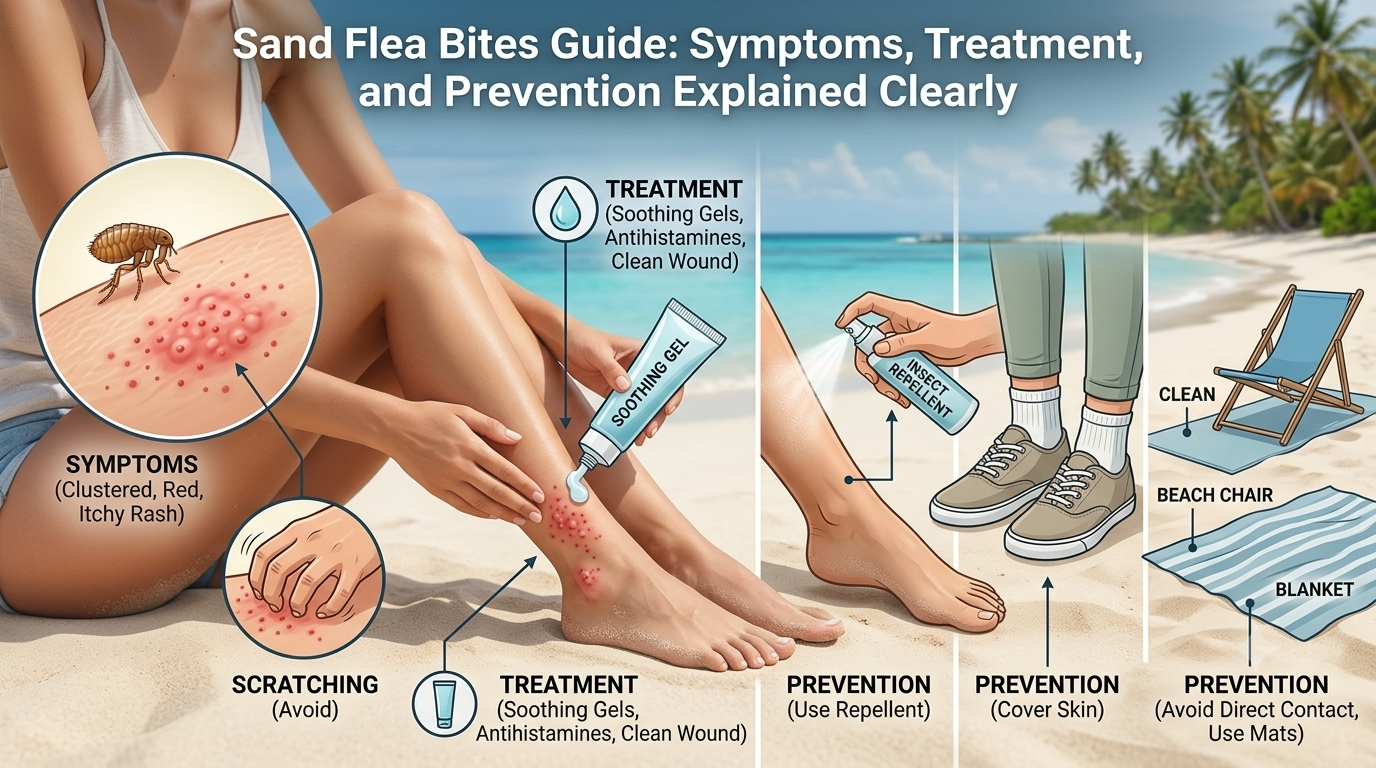
For most beachgoers in North America and many tourist destinations, a sand flea bite appears as a small, red, raised, itchy bump, often in clusters on the ankles, feet, or lower legs. The bites typically occur in areas that were close to or in direct contact with warm, damp sand.
The more serious situation, usually in certain tropical or rural environments, is when a burrowing flea embeds in the skin. Signs of this kind of sand flea problem include a swollen bump with a small black dot in the center and persistent pain rather than just itchingthis requires medical attention.
What Sand Flea Bites Look and Feel Like
A typical sand flea bite has a recognizable pattern once you know what to look for.
Most sources describe sand flea bites as:
- Small and raised: The spots are usually small papules-raised bumps with surrounding redness.
- Clustered or in lines: It’s common to see multiple bites grouped in a small area, especially on ankles, feet, or the backs of the thighs where skin pressed into the sand.
- Itchy and sometimes painful: Itching (pruritus) is typical, and some bites cause stinging or burning sensations.verywell
- Red and irritated: The skin around each sand flea bite often turns red from inflammation and scratching.
In uncomplicated cases, these bites remain superficial. They may itch intensely for several days and then slowly fade as the immune response settles down.
However, if the area is heavily scratched or not kept clean, sand flea bites can become infected. Signs of infection include increasing redness, warmth, pus, or worsening pain.
Symptoms to Watch For After a Sand Flea Bite
Beyond the visible red bumps, a sand flea bite can cause a range of symptoms, depending on your sensitivity and how many bites you have. Common symptoms include:
- Intense itching around the bites
- Swelling of the skin near the bite sites
- Tenderness or mild pain when walking if bites are on the feet or soles
- Sleep disturbance due to persistent itching at night
More serious symptoms that suggest complications or embedded fleas include:
- A small dark dot in the center of a swollen bump (possible embedded flea)
- Persistent pain rather than just itch
- Difficulty walking due to multiple painful lesions around the toes or soles
- Signs of infectionspreading redness, pus, warmth, or fever
If you notice these more severe signs after what you think is a sand flea bite, especially in an area where burrowing fleas are known to occur, you should contact a healthcare provider promptly.
Where and When Sand Flea Bites Are Most Common
Sand flea bites are closely tied to environment and timing.
They typically occur:
- On warm, sandy beaches, especially where the sand stays damp
- Near the shoreline, where organic material collects and small creatures feed
- In early morning and late evening, when sand fleas or similar creatures are most active and temperatures are cooler
Reports from coastal regions note that bites are more likely:
- After rain, when moist, cooler conditions bring sand fleas out in greater numbers
- When sitting or lying directly on the sand without a barrier
- On bare feet, ankles, calves, and the backs of thighs, which are easiest for the fleas to reachabsolutefootandankle
Knowing these patterns helps you predict when a sand flea bite is most likely and take practical steps to lower your risk.
How to Treat a Sand Flea Bite at Home
For a straightforward sand flea bites, itchy bumps without signs of embedded fleas or infection, home care focuses on hygiene, calming the itch, and preventing scratching.
Key steps supported by medical and skin-health sources include:
- Clean the area
Gently wash the bite area with mild soap and water to remove sand, salt, and bacteria. This basic step reduces the risk of infection from scratching. - Cool the skin
Applying a cool compress, ice pack (wrapped in a cloth), or even a brief, cool shower can reduce inflammation and provide immediate relief from itching. Learning about itch relief remedies may also help soothe irritated skin after insect bites. - Use anti-itch treatments
Over-the-counter options often recommended for sand flea bite symptoms include:- Hydrocortisone cream to reduce inflammation and itch
- Calamine lotion for soothing relief
- Aloe vera gel to cool and calm irritated skin
- Baking soda and water paste applied to bites for temporary relief very well
- Consider oral medications
If itching or pain is significant, short-term use of:- Oral antihistamines (for itch)
- Mild pain relievers like ibuprofen or acetaminophen (for pain and swelling)
can be helpful, as long as they’re appropriate for your age and health status.verywell
- Avoid scratching
Scratching is the biggest factor in turning a simple sand flea bite into a scab, scar, or infected lesion. Even though the itch is intense, doing what you can to keep nails away from the skinusing creams, covering the area, or trimming nailsmakes a real difference.
Most uncomplicated sand flea bites improve significantly within a few days with this kind of care. If your sand flea bite is getting worse after several days instead of better, it’s time to involve a professional.
When a Sand Flea Bite Needs a Doctor
While many sand flea bites are self-limited, several situations clearly call for medical attention. Cumulative advice from clinical sources suggests you should contact a healthcare provider if:
- You see a small black dot in the center of a swollen bump, especially on or near toes or soles, which can indicate a burrowing flea.
- The bite area shows increasing redness, warmth, or pus, suggesting infection.
- The pain becomes severe or persistent, or you have trouble walking due to foot lesions.verywell
- You develop fever or feel unwell after multiple sand flea bites.
- You have a history of strong allergic reactions to insect bites and notice widespread hives, swelling, or breathing difficulty this is a medical emergency.
For embedded fleas, medical guidance is clear: extraction should be done by a trained professional using sterile technique. Trying to dig out a flea with non-sterile tools at home can increase the risk of infection and tissue damage.verywell
Common Mistakes People Make With Sand Flea Bites
There are a number of myths and misconceptions about treating sand flea bites.
A common myth is that using the standard mosquito repellant will protect against sand fleas, beach hoppers, or other burrowing insects.
While the topicals recommended in many travel guides and medical websites are a good idea, they are not a guaranteed preventative measure. It is important to continue treatment even if one uses a topical insect repellent.
Scratching at sand flea bites is also a widespread problem.
Many sites that provide information on the subject advise against scratching at the bite, as it will lead to increased itchiness and possible infection and scarring.
If one notices a few small bumps on their skin, it is vital to stop scratching at them, as it will only lead to a more severe reaction.
Another myth that is harmful to those who have been bitten is not seeking treatment for more severe complications, which include embedded fleas or other bacteria, believing that it is unnecessary, as most cases of sand flea infestation do not require immediate care.
Those who live in or visit areas with sand fleas should bring up concerns of embedded fleas or other complications with medical professionals, if one suspects that a small black dot is at the center of the sore, or the sore is spreading outwards and becoming inflamed, as those are signs of a possible infection that can be treated.
Finally, some people who have had unpleasant experiences dealing with sand fleas give up on beaches and avoid them, believing that there is no possible way to prevent them or treat them.
In reality, proper prevention and treatment methods will allow almost anyone to enjoy the beach without having to worry about every little grain of sand.
Expert-Style Tips to Avoid Sand Flea Bites in the First Place
Professionals who work in coastal environments and clinicians who counsel travelers often recommend a layered, practical approach rather than relying on one magic product.
Time your beach visits wisely
Sand fleas and similar critters are typically most active in the cooler parts of the dayearly morning and late evening. If you’re prone to sand flea bites, aim for mid-morning to late afternoon when the sand is hotter and drier, and activity is lower.
Avoid the beach right after heavy rain
Several beach and health sources note that moist, post-rain conditions tend to bring sand fleas out in larger numbers. Letting the sand dry out and warm up again before spending long periods barefoot can reduce your chances of getting bitten.
Create a barrier between you and the sand
Instead of lying directly on the sand, use a towel, beach mat, or chair. Wearing longer shorts, and being mindful of your calves and ankles, helps as well since those are common bite sites.
Protect exposed skin especially feet and ankles
While repellents may be partly helpful, some beach experts recommend using oils or barrier creams on feet and lower legs to make it harder for sand fleas to bite. Closed shoes or water shoes offer more protection than barefoot walking near the high-tide line or in damp sand.absolutefootandankle
Rinse off and change after leaving the beach
Showering to remove sand and changing into clean clothes reduces ongoing irritation and may remove tiny organisms before they cause more bites. This is especially important for kids who like to dig and bury their legs in the sand.
None of these steps can absolutely guarantee you’ll never get a sand flea bite again, but together they significantly reduce the risk and intensity of problems.
Simple Comparison: Sand Flea Bites vs Common Beach Bites
| Feature | Sand Flea Bite | Typical Mosquito Bite |
| Usual location | Ankles, feet, calves, backs of thighs | Anywhere exposed |
| Pattern | Clusters or lines of small red bumps | Isolated or scattered individual bumps |
| Trigger environment | Warm, damp sand near shoreline | Still air near water or vegetation |
| Timing | Early morning, evening, after rain | Dusk, night, shaded areas |
| Main symptom | Intense itch, sometimes pain with walking | Itching, usually no pain |
| Special concern | Embedded flea in some regions (black dot) | Risk of mosquito-borne diseases regionally |
Understanding these differences helps you think more clearly about what bit you and how to respond.
Case Scenario: A Vacation Sand Flea Bite That Needed Extra Care
Imagine an unfortunate traveler who had a great time enjoying the tropical beach in the evening. He spent a considerable amount of time relaxing on the wet sand. The next day, he found a number of itchy bumps on his toes and the sides of his feet, which he attributed to sand fleas and tried to wash off, treat them with hydrocortisone cream, and avoid scratching. Nevertheless, two days later, one of the inflamed spots on his toe had become swollen and painful to touch, with a dark point in the center. He could barely walk and, remembering that sometimes sand fleas burrow into the skin, went to the local doctor, who pulled out the parasite and disinfected the site. The physician also prescribed antibiotics to prevent serious infections caused by secondary bacterial infections, which would be a severe complication for the traveler. Several days later, the swelling had gone, and he was glad to have at least some knowledge about what had happened to him, preventing more severe damage from sand flea infestation.
Best Practices: Putting It All Together
A good strategy to handle sand flea bites includes prevention, self-care, and knowing when to seek medical attention.
Before traveling: learn whether sand fleas or burrowing fleas are a problem in the area and bring along any necessary skin-care products, such as soap, hydrocortisone cream, and antihistamines.verywell
- While at the beach: avoid walking through wet sand after a rainstorm, travel to the beach in the morning or afternoon, wear clothing that allows you to keep as much of your skin away from the sand as possible, and keep your feet and ankles covered when possible.
- After exposure: shower and change your clothes, check your feet and ankles for fleas or tight clusters of bites, and begin treatment right away.
- As you recover: watch your bites for any sign of infection or the presence of fleas and seek medical care if needed.
This strategy helps keep sand flea bites a minor, manageable situation, especially when combined with practical beach safety tips that reduce the risk of insect bites and other common seaside hazards. While these fleas can be an annoying and persistent irritation that causes some serious skin issues, most problems are short lived and easily dealt with.
Conclusion: Handling a Sand Flea Bite With Confidence
A sand flea bites are a nuisance that shouldn’t overshadow the entire trip. A sand flea can cause itchy welts on your legs, however most of these are easy to get rid of with the first aid cream and with a little first aid. The sand flea bite should not ruin your vacation, it is important to enjoy both your resort hotel and your cheap picnic. Sand flea bites are just a few itchy welts on your feet, legs, or ankles.
Leave a sand fleas bite alone if it turns out to be nothing serious in a few days. If the itchy, red welts become painful, have a black spot in the center, or become infected then it should be taken more seriously. Sand, flea bites can be prevented, therefore with the first aid and prevention there will come an end to that itchy flea bite and you can go back to your much needed beach vacation.
FAQs About Sand Flea Bites
1. How long does a sand flea bite usually last?
Most uncomplicated sand flea bites improve noticeably within a few days, though itching and mild redness can linger for up to a week in sensitive individuals. If symptoms are getting worse after several days instead of better, it’s wise to check in with a healthcare provider.verywell
2. Can a sand flea bite make you sick?
Typical superficial sand flea bites mainly cause skin irritation and itching. However, if bites become infected or if a burrowing flea embeds in the skin, there’s a risk of pain, secondary infection, and other complications that may require medical treatment.
3. Do I need antibiotics for a sand flea bite?
Most sand flea bites do not require antibiotics and heal with proper cleaning and topical care. Antibiotics may be needed if there are clear signs of infection, such as spreading redness, warmth, pus, or fever, this decision should be made by a healthcare professional.verywell
4. Are sand flea bites worse at night?
Many people notice that itching seems more intense at night, which is common with many insect bites. Cooler temperatures, less distraction, and contact with bedding can all make bite sensations more noticeable, but the underlying reaction is the same.
5. Can pets get sand flea bites too?
Yes, dogs in particular can be affected by sand fleas, with similar itchy, red, irritated areas on the skin. Basic care includes cleaning, cooling, and using pet-safe remedies, along with keeping flea- and tick-prevention products up to date and consulting a veterinarian if lesions are severe.
6. Will a sand flea bite leave a scar?
If you avoid aggressive scratching and treat the itch early, sand flea bites usually resolve without scarring. Deep scratching, infection, or repeated irritation increases the chance of dark marks or small scars, especially in people prone to hyperpigmentation.
7. Are sand flea bites the same as bed bug bites?
No. While both can appear in clusters and cause intense itching, sand flea bites typically affect areas that touched the sand (feet, ankles, legs), whereas bed bug bites are often on exposed skin that contacts bedding. The environments and prevention strategies are different, so accurate identification helps you address the right source.