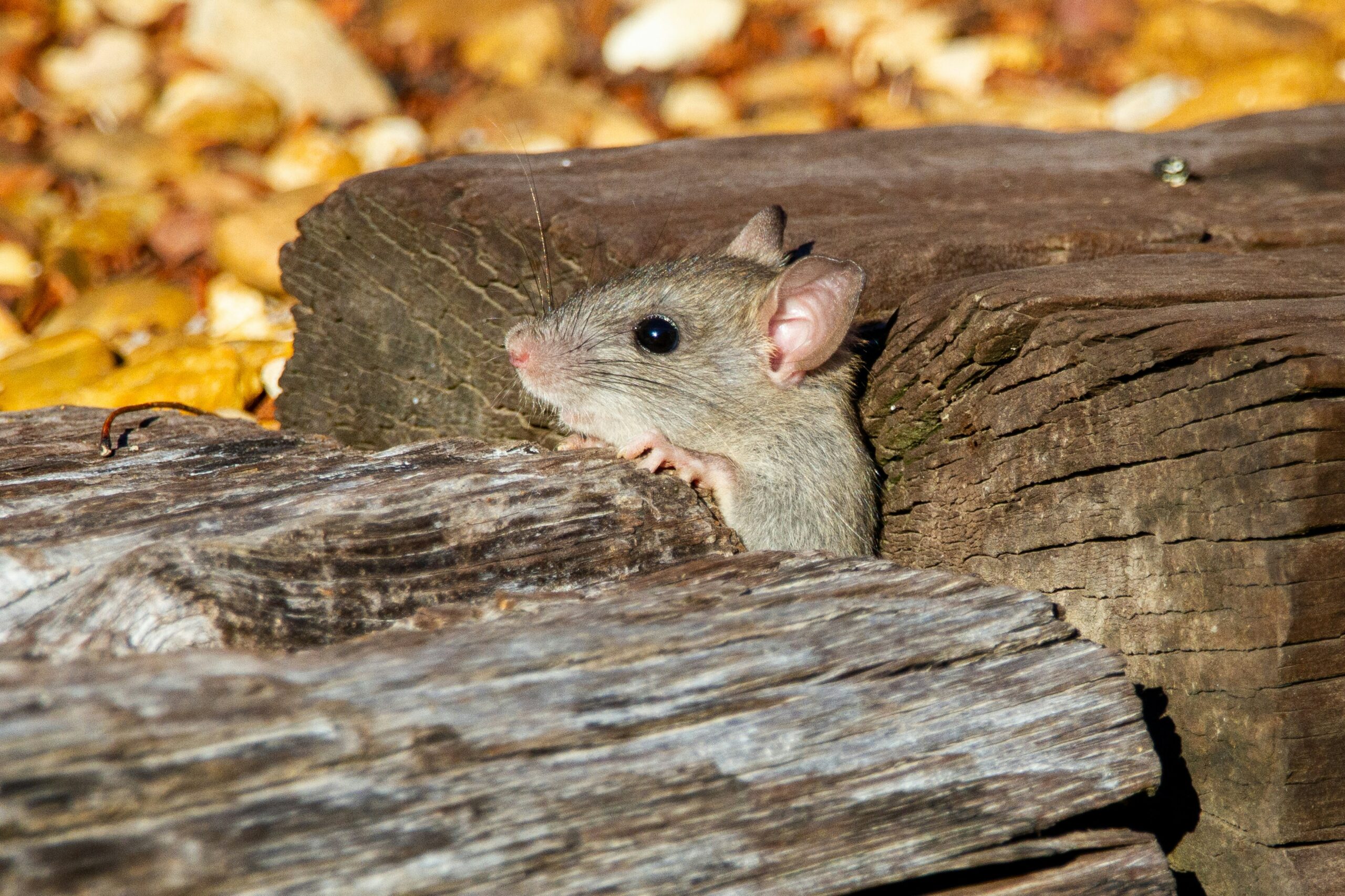
How to Get Mice Out of Walls: 7 Proven Steps to Remove and Prevent Them
Scratching, squeaking, or scampering sounds coming from within walls is unsettling enough-all the more so if they appear to be located inside something entirely inaccessible.If you’re wondering how to get mice out of walls, the solution is not simply to make the animals leave the wall cavity. Instead, better to find out where they gained access, mouseproof the animals inside, and keep mice out of the house.
Mice can squeeze into unbelievably tight holes and often use wall spaces as shielded paths for their travels or as nesting locations. According to the Centers for Disease Control and Prevention, the recommended plan for dealing with rodents involves seals, baits, and sanitation. These strategies have more merit than relying on repellent odors, ultrasonic technology and other mouse-scaring tactics that ignore the mice already there.
What Mice Are Doing Inside Your Walls
The presence of a mouse in a wall does not necessarily mean it is trapped within the space. The cavity of the wall serves as a habitat for the rodent, as well as a passageway between other areas.
That includes attics, basements, crawl spaces, kitchens, and more. In addition, the noises the animal is making could lead you to believe that it is traveling through the cavity of the wall rather than staying in one central area. This means it could be entering through plumbing, electrical wiring, vents, the foundation, doorways, or other wall openings and working its way around the house.
According to Penn State Extension, walls, ceilings, floors, and other parts of your home’s structure need to be inspected since openings as small as a pencil’s width can be an easy entry point for mice
This helps explain how simply attempting to get the mouse out of the wall can cause it to escape, with the possibility of another mouse taking its place.
Common signs of mice in walls
You may notice:
- Scratching or scurrying sounds, particularly at night
- Squeaking or movement inside wall cavities
- Mouse droppings near walls, cabinets, appliances, or storage areas
- Gnaw marks
- Shredded paper, insulation, fabric, or other nesting materials.
- A stale or musky odor
- Greasy marks along frequently used routes
- Mice appearing inside rooms despite doors and windows being closed
One isolated sound does not necessarily prove that you have an infestation. However, repeated nighttime activity combined with droppings or other evidence makes rodents considerably more likely.
Why Simply Sealing the Wall From Inside Can Be a Mistake
One of the most critical questions is when to seal an opening.
If you find an opening that is actively being used to gain entry into a wall cavity while mice are gaining entry to the structure, sealing that opening without knowing where the mice are going will only cause the animal to be trapped within the building.
This does not mean that holes should be left alone either. Exclusion is one of the most important aspects of mouse control. It is just a matter of patience and proper timing.
The best way is to monitor the incoming traffic and remove the population of mice first before any sealing activity takes place.
The EPA defines integrated pest management as the coordinated use of exclusion and the removal of food and water sources, nesting sites, and other harborages in addition to appropriate control measures such as pesticides.
How to Get Mice Out of Walls Step by Step
1. Confirm That Mice Are Actually Present
Before drilling holes in your drywall and setting traps all over the house, determine if mice are actually the cause of the issue.
Listen around the wall where the noises have been heard. If applicable, figure out if the sounds seem to come from a specific spot or travel along the walls.
After narrowing down the search area, look behind large appliances, inside cabinets, along baseboards, under sinks, around pipes and other places where the mice could be nesting.
The droppings are often an indicator of larger infestation areas.
Don’t forget that other home appliances and structures may also make noise at night, such as pipes, heating and air conditioning vents, and settling wood.
2. Find How the Mice Are Getting Into the House
This is where many unsuccessful mouse-control attempts go wrong.
A trap may catch one or several mice, but if the building remains accessible, new mice can replace them.
Inspect both the interior and exterior.
Outside, look around:
- Foundation cracks and gaps
- Utility lines
- Plumbing penetrations
- Doors and door sweeps
- Vents
- Roof and attic access points
- Garage openings
- Crawl-space entrances
- Areas where different building materials meet
Inside, examine areas around pipes, wires, cabinets, floor openings, and wall penetrations.
CDC guidance indicates that mice can squeeze through holes as small as 1/4-inch (6 mm), so it’s a good idea to check the home for such openings.
The Penn State Extension recommended sealing even smaller openings using materials that are resistant to rodents and inspecting pipes, wires, around the foundation, and other possible entry points.
What should you use to seal mouse entry points?
The material will depend on the opening.
Small openings can be filled with appropriate sealant plus a rodent-resistant material, especially when following reliable mouse-proofing tips to prevent future entry
Larger openings may need to be filled with hardware cloth, metal, or concrete, or other appropriate material.
The goal is to not only fill the opening but to make sure that what is used to fill it will hold up to the gnawing of the rodents as well as the weathering or settling of the building itself.
Using expanding foam is not necessarily a good idea. If the mouse is really determined, it might be able to work its way through some materials.
3. Remove Food and Water Sources
A mouse does not require a large food supply to live inside or outside your house.
Breadcrumbs, open packages, pet food, trash, and accessible pantry items may entice them to stay around. The EPA recommends that you secure food and trash, remove garbage regularly, store pet food and water, and eliminate any water sources like leaks.
Additionally, make sure to store dry goods in sealed containers rather than ripped bags.Clean up any spills and avoid leaving food out overnight, while following practical home pest prevention tips to make the property less attractive to mice
This won’t get rid of any mice currently inside a wall, but it will make an otherwise appealing home less desirable and improve your chances of getting rid of them.
4. Use Snap Traps Near Mouse Activity
For the purpose of trapping mice inside a house, the use of correctly placed snap traps is one of the most reliable methods.
According to the CDC, they have been recommended as an efficient way to handle an infestation of house mice. These traps are also suggested by the Penn State Extension, which notes that snap traps are among the methods preferred for use inside the house.
The main principle is that of course, the traps should be placed correctly.
Mice like to run along the edges and walls, rather than being found in the middle of a room. According to the Penn State extension, the trap’s trigger mechanism should be placed near a wall or along an edge, where the mice are likely to run.
Therefore, instead of placing one trap in the middle of a room, it is better to set a few on the edges, following signs of the rodents’ activity, making sure that pets and children do not reach them.
It is advisable to use a single piece of any appropriate bait as a lure, following the instruction that comes with the trap. It is not necessary to make the food stash too large, as it will prevent the mouse from being forced to squeeze into the trap.
Why trapping can help with mice in walls
You may not be able to set a trap directly inside the wall cavity without accessing it. Luckily for you, mice often have to leave the protection of the wall cavity to get to food and water.
By placing the trap on these travel routes and outside of the wall cavity, you have a good chance of catching the mouse as it comes out to explore.
This is why finding signs of mice activity is more important than just trapping randomly.
5. Be Careful With Mouse Poison Inside Walls
Rodenticide can seem like a good idea because you can’t get to the mice in the wall. Poisoning the pests that are in an area you can’t access, however, presents a different kind of problem.
Mice who eat the poison may die in a place where they can’t be reached, causing a mess and potential odor issues
There are also the dangers posed to children, pets, and wildlife.
The EPA regulates rodenticides made for use in the home and urges the use of proper bait stations for any bait used.
The EPA’s current stance is that consumer rodenticides are only available in block or paste form with EPA approved bait stations and not in pellet form.
If you do decide to use bait make sure you follow the application instructions on the package and keep the bait away from children and pets. The EPA maintains that the ready-to-use bait stations help prevent access by children, pets, and wildlife when used as directed. If the mice are in cavities where they can’t be seen, a professional exterminator is the best option in many cases.
6. Do Not Rely on Ultrasonic Devices or Strong Scents as the Main Solution
Peppermint oil, ammonia, mothballs, ultrasonic repellers and other methods are often suggested for keeping mice away.
The major issue with those is that they usually miss the point. A comprehensive pest control campaign should address all possible sources of food, shelter, and entry points.
For example, placing some essential oils in the walls may make them uncomfortable for the time being, but they will find another way in if there is one.
Integrated Pest Management suggests a multifaceted approach that includes both exclusion and control methods.
Thus, it focuses on removing attractants and potential entry points, sealing shelter, and using traps or other means of capture.
7. Clean Mouse Droppings and Nesting Material Safely
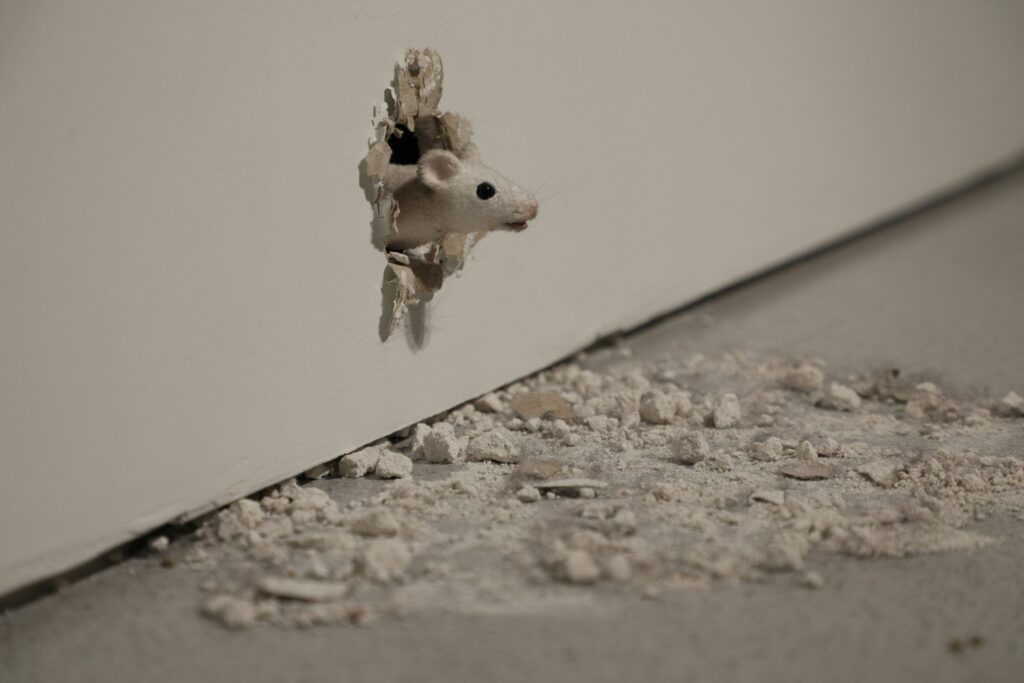
Finding mouse droppings means the problem is far from being solved.
Urine, saliva, nesting materials, and the rodents themselves can expose you to pathogens. According to the CDC, hantaviruses can be transmitted through contact with infected animals’ urine, droppings, and saliva.
That is why cleaning up after them requires more careful handling than just sweeping the dust into a dustpan.
The Penn State Extension even advises against trying to sweep or vacuum dry rodent droppings, urine, or nesting materials.
They recommend following the CDC’s guidelines for cleaning up after rodents. Remember to protect your skin, eyes, and especially your lungs from possible contamination. Take extra precautions if there is a risk of significant exposure to pathogens.
Professional help may be required to get rid of rodents in walls, attics, or other hard-to-reach areas.
Perhaps there are old contaminated nesting materials inside the walls insulation or the heating system’s ducts. In that case, it is better to call in professionals instead of trying to do it yourself.
What If You Can Hear a Mouse but Cannot Trap It?
This is probably one of the worst cases scenarios.
You hear noises every night, but you don’t see a mouse and you don’t see how they get in.
But that’s the thing about walls, they are not permanent homes for mice, they mostly serve as a pathway between points ‘A’ and ‘B’.
See if you can find transition points.
[Look for droppings near cabinets, appliances, plumbing or electrical access points and baseboards, along with other home cleaning and maintenance tips that can help keep problem areas under control. Check the little gaps around plumbing and wires running through your walls. Check the basement, the attic, the garage, the crawl space, the foundation, if you have any of these.
Then, try to set up traps where the signs suggest mice are going
If there is still activity and you have no idea where they are coming or going to, call a professional exterminator to check the building for you.
Should You Open the Wall?
Usually, it is not a good idea to start by opening walls up.
Cutting a hole in the drywall simply because you can hear something scratching around will only lead to extra work, and even then you may not find the animal
Walls contain insulation, electrical wiring, plumbing, ducts, and supports. Opening up walls needlessly will cause more headaches and complications than it’s worth. Opening up walls may be acceptable if there’s an obvious nest, dead animal causing an odor, heavy infestation making insulation worthless, or other factors deemed reasonable by professionals. If you think there may be a dead mouse in your wall because of a smell but you can’t find it, maybe you shouldn’t just start cutting holes willy nilly until you do.
Why Sealing the House Matters More Than Catching One Mouse
Imagine catching the mouse you hear tonight.
If a hole remains open near the foundation or a utility penetration, another mouse can enter later.
That is why effective mouse management is best understood as a cycle:
Find the entry → control the mice → remove attractants → clean contamination → seal the structure → monitor for new activity.
EPA guidance similarly emphasizes prevention, exclusion, sanitation, and removal of nesting opportunities as core elements of rodent control.
The goal is not merely to eliminate today’s mouse. It is to make the building difficult for the next mouse to enter.
Common Mistakes to Avoid
Sealing every hole immediately
Sealing is essential, but active rodent movement should be considered before closing an important route.
Putting one trap in one room
A single trap may be poorly positioned. Mouse control depends heavily on locating active travel routes.
Using poison as the first and only solution
Rodenticide does not correct structural entry points, and placing poison where a dead mouse cannot be retrieved can create additional problems.
Ignoring the exterior
Mice can enter through surprisingly small openings. Interior cleaning without exterior exclusion leaves the building vulnerable.
Vacuuming dry droppings
Dry cleanup can disturb contaminated material. Follow appropriate CDC cleaning guidance instead.
Assuming every nighttime noise is a mouse
Confirm the evidence before cutting walls, setting large numbers of traps, or applying pesticides.
When to Call a Pest-Control Professional
Professional help should be sought in case you notice frequent mouse activity despite an initial trapping and exclusion attempt, multiple entry points, signs of continued activity in inaccessible locations, or a significant amount of droppings and nesting materials.
In addition, it may be a good idea to call an exterminator if the infestation occurs in inaccessible places like heating and air conditioning ducts, attics, crawl spaces, insulation, or inside walls.
A competent professional will not only set up bait stations but also perform an inspection to locate entry points, travel routes, food sources, and nesting areas to recommend necessary changes.
This is an integral part of the integrated pest management approach, which prioritizes the elimination of the factors allowing pests to appear rather than just getting rid of them.
Final Analysis: Getting Mice Out Is Only Half the Job
The most effective answer to how to get mice out of walls is not a single trick or product. Mice can use wall cavities as protected routes, so successful control requires attention to the entire building.
Start by confirming the signs, tracking their whereabouts to their possible entry and nesting sites, and limiting their access to food and water. Set snap traps to indoor mice control in an appropriate manner, take measures to deal with their droppings, and consider rodenticides as an optional method, not a primary one. Most importantly, make sure to eliminate the points of entry and egress.
Ideally, you want to create an environment where mice cannot get in, feed, nest, and move undisturbed. That is why a combination of trapping, cleaning, and sealing, along with rodenticides, is a much better method than just trying to scare away a mouse from inside the walls.
Frequently Asked Questions
1.How long does it take to get mice out of walls?
There is no universal timeline. It depends on the number of mice, available food, trap placement, and how many entry points the building has. Continued activity after trapping usually means additional mice or an unresolved access point should be investigated.
2.Will mice leave the walls on their own?
They may move between the wall cavity and other parts of the building, but waiting for them to leave does not solve the underlying problem. If food, shelter, and entry points remain available, mice can continue using the structure.
3.Can I use peppermint oil to get mice out of walls?
Peppermint oil and other strong scents are not a substitute for exclusion and trapping. A more reliable strategy is to remove food sources, seal entry points, and control the existing mice.
4.Should I use poison for mice inside walls?
Poison can create safety and disposal concerns, particularly if a rodent dies in an inaccessible location. If rodenticide is used, EPA guidance calls for appropriate registered products and bait stations used according to the label.
5.How small of a hole can a mouse get through?
CDC guidance states that mice can enter openings about 1/4 inch (6 mm) wide. This is why small gaps around pipes, wires, foundations, doors, and other penetrations deserve attention.
6.Should I put a trap inside the wall?
Usually, it is better to place traps along accessible mouse travel routes rather than cutting into a wall solely to install a trap. If there is strong evidence of an infestation inside an inaccessible cavity, a pest-control professional can determine whether wall access is necessary.
7.How do I clean mouse droppings safely?
Do not dry sweep or vacuum rodent droppings, urine, or nesting material.CDC and extension guidance recommend procedures designed to avoid stirring contaminated material into the air.
Conclusion
Learning how to get mice out of walls is less about forcing the animals out and more about addressing the conditions that allowed them to enter in the first place. Traps can help reduce the active mouse population, but lasting control usually requires identifying entry points, removing accessible food and water, and sealing gaps after the infestation is under control.
Avoid spending time and resources on methods that only encourage the mice to burrow further, or cause other issues. If scratching sounds persist, or if there is an ongoing issue with droppings, odor, or other signs despite your best efforts, it may be best to call in professionals. This is especially true for particularly persistent or widespread infestations, where the danger might require a pest control professional to accurately identify nests, and effectively address the issue.
With all that in mind, the best course of action is clear. By finding and stopping the mice, plugging their entrances, and removing their sources of food and shelter, you’ll be able to prevent future infestations with much greater ease.